


Description
Thermal Dynamics 22-1087 Plasma Electrode: Engineered for Extended Life and High-Duty Cycle Performance
Introduction: The Critical Component for Uninterrupted Productivity
In the demanding environment of industrial plasma cutting, system reliability is measured in consistent arc starts and uninterrupted operation. At the core of this reliability lies the plasma electrode, the component responsible for initiating the pilot arc and facilitating the transfer of cutting current. For operators of compatible Thermal Dynamics systems pushing their equipment in production settings, the Thermal Dynamics 22-1087 Plasma Electrode represents a significant advancement in consumable engineering. This is not a standard replacement part; it is a high-duty cycle component designed to maximize arc-on time, reduce changeover frequency, and deliver unwavering performance through extended shifts and demanding applications.
Choosing a substandard electrode invites a cascade of operational issues: unreliable arc ignition, erratic cutting performance, and premature failure that jeopardizes the more expensive nozzle and torch body. The Thermal Dynamics 22-1087 Plasma Electrode is engineered to eliminate these variables. Built with enhanced materials and precision tolerances, it provides the stable electrical foundation required for repeatable, high-quality cuts. This article details the specific innovations, material science, and economic benefits that make the 22-1087 electrode an essential upgrade for shops focused on productivity and cost-effective operation.

Advanced Engineering: Designed for Durability and Stability
The Thermal Dynamics 22-1087 Plasma Electrode is engineered around the principle of managed emissivity and superior thermal dissipation. Its design directly targets the primary failure modes of standard electrodes: excessive hafnium emitter erosion and heat-induced degradation of the copper body.
The key innovation is an optimized hafnium emitter insert. While using high-purity hafnium is standard, the 22-1087 features an emitter with carefully controlled density and a tailored geometry. This design promotes a more stable, slower-burning oxidation process at the tip, which is the fundamental mechanism of electrode wear. By controlling this erosion, the electrode maintains a consistent arc gap for a longer period, ensuring reliable performance throughout its extended lifespan.
Complementing this is the high-mass copper body machined from premium OFHC (Oxygen-Free High Conductivity) copper. The increased material volume acts as a more effective heat sink, drawing thermal energy away from the critical emitter interface more efficiently. This prevents the localized overheating that can lead to premature emitter failure or deformation of the electrode’s seating surfaces within the torch.
Key Performance Advantages:
-
Extended Service Life: Engineered to deliver significantly more starts and operating hours than a standard electrode, often matching or exceeding the life of two standard consumables.
-
Exceptional Arc Start Reliability: Provides consistent, easy ignition even after cooling cycles or in less-than-ideal conditions, crucial for automated systems.
-
Superior Thermal & Electrical Stability: Maintains stable cutting parameters and protects the nozzle from double-arcing by preserving correct emitter alignment and gap.
-
Reduced Total Consumable Cost: Fewer changeovers lower consumable inventory needs and reduce labor costs associated with maintenance downtime.
-
Protection for High-Value Components: A stable electrode is the best defense against catastrophic nozzle failure and torch damage, safeguarding your larger equipment investment.
Technical Specifications & Performance Comparison
The engineered superiority of the Thermal Dynamics 22-1087 Plasma Electrode is quantified in the following comparison, highlighting why it is a value-driven choice for serious operations.
| Parameter | Thermal Dynamics 22-1087 Plasma Electrode (Extended Life) | Standard OEM Electrode (e.g., 9-8197) | Economy/Generic Electrode |
|---|---|---|---|
| Emitter Design | Optimized Hafnium Mass & Geometry for Controlled Erosion | Standard Hafnium Insert | Small, often low-purity or inconsistent emitter |
| Copper Body & Thermal Mass | High-Mass OFHC Copper for Maximum Heat Dissipation | Standard OFHC Copper body | Lower-grade copper; minimal thermal mass |
| Expected Lifespan (Relative) | 2X – 3X Longer in high-amperage, continuous use | Baseline (1X) | 0.5X – 0.7X (Fails unpredictably) |
| Arc Start Consistency | >99.5% reliability under specified conditions | ~97-98% reliability | Highly variable; fails when most critical |
| Impact on Nozzle Life | Maximizes matched nozzle lifespan through stable arc gap | Standard nozzle wear | Significantly reduces nozzle life via double-arcing |
| Operational Cost-Per-Hour | Lowest (amortized cost over extended life) | Moderate | Highest (frequent failures & collateral damage) |
| Ideal Use Case | CNC Tables, Production Shops, High-Duty Cycle Manual Cutting | General Fab, Maintenance, Intermittent Use | Not recommended for professional use |
Material Science: The Foundation of Longevity
The extended performance of the Thermal Dynamics 22-1087 Plasma Electrode is rooted in exceptional material quality and processing. The oxygen-free high thermal conductivity (OFHC) copper is critical. Its purity ensures there are no oxide inclusions that could create points of high electrical resistance and localized heating. The high thermal conductivity (over 390 W/m·K) is what allows the electrode to act as an efficient heat sink, a property directly leveraged by its increased mass.
The hafnium emitter is the performance heart. Hafnium is chosen because it forms a protective hafnium oxide (HfO₂) layer at the tip when heated in an oxygen-containing plasma. This oxide has an extremely high melting point (~2,800°C). The quality, grain structure, and bonding process of the hafnium to the copper in the Thermal Dynamics 22-1087 Plasma Electrode are precise. A superior bond prevents the insert from cracking or separating under thermal cycling, while a consistent grain structure ensures even erosion.
Optimal Application Scenarios
The Thermal Dynamics 22-1087 Plasma Electrode delivers maximum return on investment in specific high-demand environments:
-
Automated CNC Plasma Cutting: Uninterrupted production is paramount. The electrode’s reliability prevents machine stops for consumable changes and protects against undetected arc issues that can ruin expensive nested parts.
-
High-Volume Production Fabrication: In job shops running multiple shifts, reducing consumable change frequency directly increases billable machine time.
-
Heavy Plate Processing (1/2″ and above): High-amperage cutting on thick material generates immense heat. The 22-1087’s enhanced thermal management is essential for longevity.
-
Rental Fleets and Tool Pools: Provides end-users with reliable performance and reduces maintenance overhead for the equipment owner.
-
Any Operation Prioritizing Predictable Maintenance: Allows for scheduled electrode/nozzle changes based on tracked arc hours rather than reacting to unexpected failures.
System Integration: The Paired Consumable Ecosystem
The Thermal Dynamics 22-1087 Plasma Electrode must be used as part of a matched system to realize its benefits:
-
Paired Nozzle Replacement: THIS IS CRITICAL. Always install with a new, compatible nozzle (e.g., 22-1065 or 22-1154). A worn nozzle will destroy a new electrode instantly via double-arcing.
-
Compatible Swirl Ring/Retaining Cap: Ensure this centering component is in spec to maintain perfect emitter-to-bore alignment.
-
Torch Integrity Check: Before installing premium consumables, verify the torch head’s electrical contact surfaces and cooling passages are clean and undamaged.
-
Optimal Gas and Settings: Use clean, dry air and follow machine cut charts. Moisture accelerates electrode oxidation and pits the emitter.

Frequently Asked Questions (FAQ)
Q1: How do I confirm the Thermal Dynamics 22-1087 Plasma Electrode is compatible with my system?
A: Compatibility is determined by your specific torch model, not just the power supply. The part number 22-1087 is designed for particular Thermal Dynamics torch families. The only way to guarantee a fit is to check your torch’s official parts manual, use the model number lookup on the Thermal Dynamics website, or consult with an authorized distributor. Do not rely on visual similarity.
Q2: When should I replace this electrode? Can I wait until it fails to start an arc?
A: No. Proactive replacement is key to protecting your nozzle and ensuring quality. Monitor the hafnium emitter pit depth. Replace the Thermal Dynamics 22-1087 Plasma Electrode when the pit reaches approximately 1.5 – 2.0 mm. Waiting for complete failure (a deep pit) forces a longer, unstable pilot arc that damages the nozzle. Implement a tracking system based on arc hours or pierce counts.
Q3: The 22-1087 costs more. How does it save me money?
A: It saves money through Total Cost of Ownership (TCO). Analyze: 1) Direct Cost: Buying one 22-1087 versus 2-3 standard electrodes. 2) Nozzle Savings: A stable electrode prevents double-arcs that destroy nozzles ($). 3) Downtime Cost: Each consumable change takes 5+ minutes of non-cutting time. 4) Productivity Cost: Reliable starts and consistent cuts mean less scrap and rework. The higher upfront cost is quickly offset.
Q4: Can I use this extended-life electrode with a standard nozzle?
A: It is strongly discouraged. Consumables are engineered as a wear pair. Using an extended-life electrode with a standard nozzle creates a mismatch. The nozzle will likely wear out first, and continuing to use the still-viable electrode with a worn nozzle is a primary cause of double-arcing. For best results and system protection, use consumables from the same performance tier (e.g., pair with an extended-life nozzle).
Q5: What is the primary cause of premature failure, even with a good electrode?
A: The most common cause is moisture in the compressed air supply. Water vapor causes rapid, uneven oxidation and pitting of the hafnium emitter, destroying it quickly. Investing in a quality air dryer is as important as investing in quality consumables. Other causes include loose consumables (poor electrical contact), a damaged swirl ring (misalignment), or excessively dragging the torch.
Conclusion: The Strategic Investment in Cutting Reliability
In industrial manufacturing, unpredictability is the enemy of profit. The Thermal Dynamics 22-1087 Plasma Electrode is engineered to remove unpredictability from the electrical heart of your plasma cutting process. It transforms the electrode from a frequently changed disposable into a durable, high-performance component that supports extended production runs and protects your capital equipment.
Choosing the 22-1087 is a decision to prioritize long-term operational efficiency over short-term consumable cost. It is the defining choice for professionals who understand that true savings are realized not at the point of purchase, but in the sustained, reliable output of their shop.
|
Shield Gas Distributor
|
36-1273
|
Shield Cup
|
22-1016
|
|
Shield Gas Distributor
|
36-1282
|
Shield Cap
|
22-1025
|
|
Shield Gas Distributor
|
36-1280
|
Shield Gas
|
22-1272
|
|
Shield Cup
|
36-1018
|
Plasma Gas Distributor
|
22-1041
|
|
Shield Retainer
|
36-1019
|
Electrode
|
22-1069
|
|
Cartridge
|
36-1020
|
Cartridge
|
22-1020
|
|
Shield Cup
|
36-1016
|
Shield Cap
|
22-1027
|
|
Shield Cap
|
36-1025
|
Nozzle
|
22-1153
|
|
Shield Cap
|
36-1028
|
Electrode
|
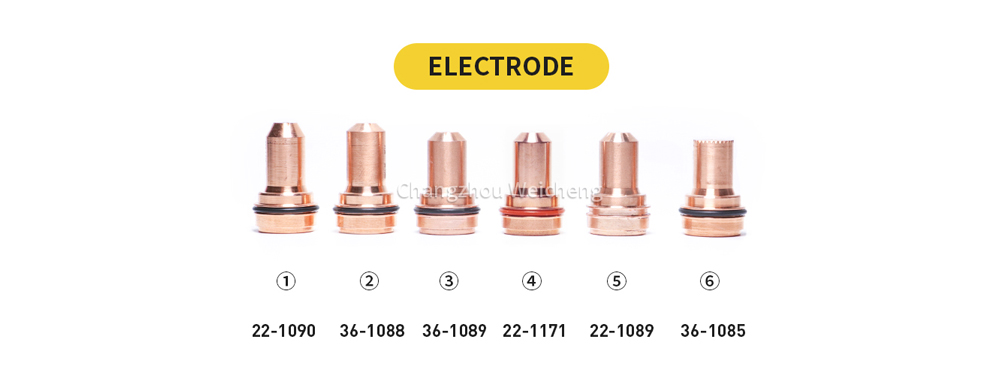
22-1171
|
|
Shield Cap
|
36-1029
|
Shield Cap
|
22-1030
|
|
Shield Cap
|
36-1034
|
Shield Gas Distributor
|
22-1285
|
|
Shield Gas Distributor
|
36-1272
|
Nozzle
|
22-1055
|
|
Nozzle
|
36-1051
|
Plasma Gas Distributor
|
22-1042
|
|
Nozzle
|
36-1053
|
Electrode
|
22-1075
|
|
Nozzle
|
36-1060
|
Cartridge
|
22-1022
|
|
Nozzle
|
36-1055
|
Shield Cap
|
22-1028
|
|
Nozzle
|
36-1058
|
Shield Cap
|
22-1275
|
|
Nozzle
|
36-1064
|
Nozzle
|
22-1054
|
|
Plasma Gas Distributor
|
36-1041
|
Electrode
|
22-1072
|
|
Electrode
|
36-1069
|
Cartridge
|
22-1020
|
|
Shield Cap
|
36-1027
|
Nozzle
|
21-1052
|
|
Electrode
|
36-1071
|
Nozzle
|
21-1055
|
|
Electrode
|
36-1089
|
Electrode
|
21-1075
|
|
Electrode
|
36-1085
|
Electrode
|
21-1093
|
|
Shield Gas Distributor
|
36-1273
|
Nozzle
|
21-1152
|
|
Shield Gas Distributor
|
21-1272
|
Nozzle
|
21-1153
|
|
Shield Gas Distributor
|
21-1285
|
Electrode
|
21-1170
|
|
please contact us!
|
Electrode
|
21-1171
|
|


Reviews
There are no reviews yet.