


Description
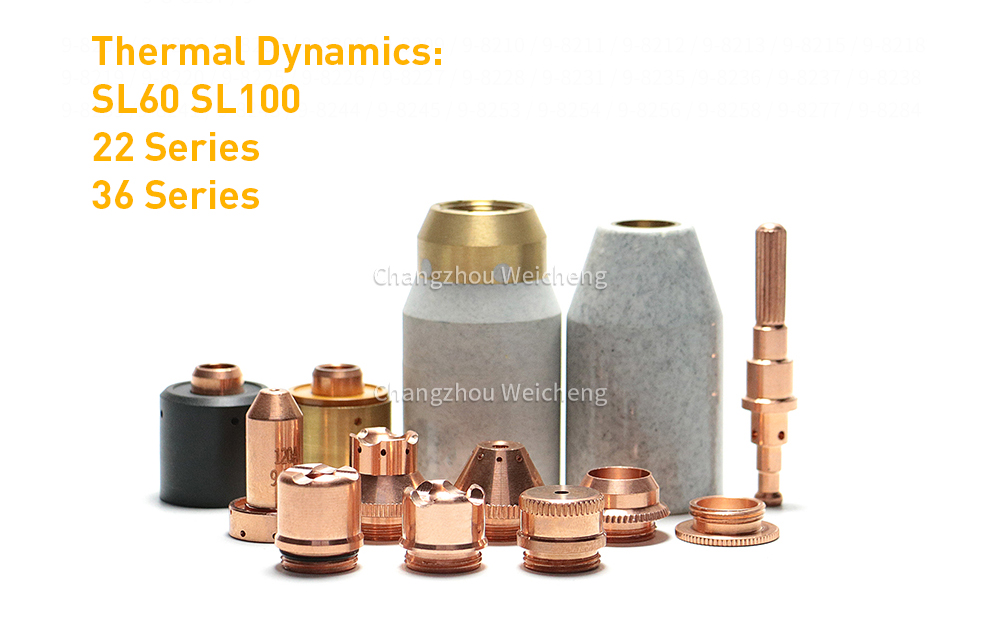
36-1046 Plasma Shield Cap: The Essential Guardian for Your Plasma Cutting Torch
Introduction: More Than a Cover – Your First Line of Defense
In the intense, high-stakes environment of plasma cutting, success hinges on the integrity of the smallest components. While the electrode and nozzle rightfully receive significant attention, a critical component stands guard to ensure their performance: the Shield Cap. Specifically designed for compatibility with a range of industrial plasma systems, the 36-1046 Plasma Shield Cap is engineered not as a passive accessory, but as an active protective system. Its role is fundamental—to safeguard your torch’s precision, extend the life of expensive consumables, and ensure consistent, high-quality cuts by managing the chaotic environment at the arc.
A compromised or generic shield cap is a primary culprit behind frequent nozzle failure, erratic arcs, and unnecessary downtime. Molten spatter can fuse to inferior materials, obstructing critical gas flow and leading to destructive secondary arcing. The 36-1046 Plasma Shield Cap is built to withstand this abuse. Constructed from advanced materials and designed with precision, it represents a direct investment in torch longevity, process stability, and overall cutting economy. This guide explores the engineering, benefits, and indispensable value this specific shield cap brings to professional metal fabrication.

Core Function: The Multi-Role Protector
The 36-1046 Plasma Shield Cap performs several simultaneous, critical functions that are vital to your cutting operation’s health:
-
Primary Spatter and Splash Barrier: It acts as a physical shield, intercepting the majority of molten metal droplets expelled during piercing and cutting. This prevents spatter from welding directly to the nozzle and retaining cap, which can distort gas flow and cause rapid failure.
-
Shielding Gas Flow Director: Its precisely engineered exit orifice shapes the final column of shielding gas. This gas cools the nozzle and protects the cut face from atmospheric contamination. Any distortion or blockage in this orifice directly ruins cut quality.
-
Torch Body Guardian: It protects the torch’s front-end threads, electrical connections, and insulators from physical impact, heat, and conductive spatter buildup—failures that can lead to costly torch repairs or replacement.
-
Safety and Process Stabilizer: By maintaining a clean, controlled environment around the arc, it contributes to arc stability and contains sparks, enhancing both cut consistency and operator safety.
Key Advantages of the 36-1046 Plasma Shield Cap:
-
Superior Spatter Resistance: Advanced material composition and surface finish prevent spatter from adhering aggressively, making cleanup quick and effective.
-
Extended Nozzle & Electrode Life: By protecting the nozzle from direct impact and maintaining proper cooling, it directly contributes to maximizing the lifespan of your entire consumable set.
-
Guaranteed Cut Quality Consistency: Ensures shielding gas flows symmetrically and unobstructed, which is essential for achieving square, dross-minimized cuts.
-
Exceptional Durability: Engineered to resist cracking, warping, and degradation from high heat and thermal cycling, even in demanding production environments.
Technical Specifications & Performance Comparison
The value of a premium Plasma Shield Cap like the 36-1046 is best understood through direct comparison with common, lower-quality alternatives.
| Parameter | 36-1046 Plasma Shield Cap (Premium OEM-Spec) | Standard Generic Shield Cap | Consequence of Using an Inferior Cap |
|---|---|---|---|
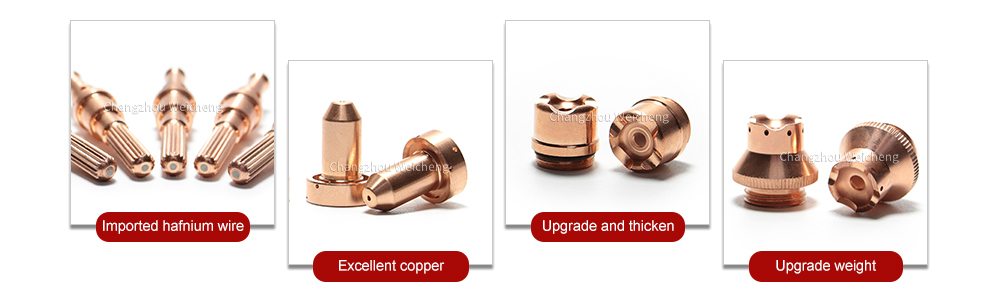
| Primary Material | High-Temp, Fiber-Reinforced Ceramic Composite | Basic Plastic or Low-Grade Ceramic | Prone to melting, cracking, and rapid degradation under heat. |
| Thermal Shock Resistance | Excellent – Withstands repeated piercing cycles | Poor – Cracks or deforms under thermal stress | Frequent, unexpected failures lead to unprotected operation. |
| Spatter Adhesion & Release | Low – Non-stick surface allows for easy cleaning | High – Spatter bonds permanently, requiring destructive removal | Clogged gas ports ruin cut quality; cap becomes unusable. |
| Orifice Precision & Stability | Precision-molded/CNC-machined to exact tolerances | Often uneven, out-of-round, or rough-cast | Causes turbulent, asymmetric gas flow, increasing bevel and dross. |
| Structural Integrity | Robust design, resistant to impact and cracking | Thin-walled, brittle construction | Shatters easily upon minor impact, offering zero protection. |
| Thread & Mounting Integrity | Precision threads, often with metal reinforcement | Weak, molded plastic threads prone to stripping | Poor fit leads to gas leaks, misalignment, and torch damage. |
| True Operational Cost | Higher initial cost, lowest cost-per-hour of runtime | Low initial purchase price | Highest long-term cost due to torch damage & consumable waste. |

Material Science: Engineered for the Plasma Environment
The 36-1046 Plasma Shield Cap derives its performance from advanced material science. It is typically manufactured from a high-temperature ceramic composite or an engineered, fiber-reinforced polymer. This material selection is critical for several reasons:
-
Electrical Insulation: It prevents the cap from becoming part of the electrical circuit, eliminating the risk of dangerous double-arcing between the shield and workpiece.
-
Thermal Stability: It maintains dimensional integrity and strength at the high temperatures radiated from the plasma arc and molten metal, resisting softening, melting, or deforming.
-
Low Surface Energy: The material and often a specialized coating are designed to have a non-stick quality, causing molten spatter to ball up and release rather than fuse to the surface.
This combination allows the 36-1046 Plasma Shield Cap to perform reliably as a sacrificial protector—absorbing punishment to preserve the more valuable and precision components behind it.
Ideal Application Scenarios
The 36-1046 Plasma Shield Cap proves its worth across all cutting environments, particularly demanding ones:
-
High-Spatter Operations: Piercing thick plate, cutting painted/coated metals (galvanized, primed), or performing bevel cuts where spatter generation is extreme.
-
CNC and Automated Plasma Cutting: On unmanned tables, a failing shield cap can cause undetected quality issues and torch crashes. Its reliability is key to uninterrupted production.
-
Production Shops with High Duty Cycles: Environments with long arc-on times where equipment is subjected to continuous thermal stress.
-
Educational and Training Facilities: Protects equipment from beginner errors and reduces maintenance frequency.
-
General Fabrication and Maintenance: For any professional who values equipment protection and consistent results, it is a fundamental consumable.
The Consumable System: Related Products for Optimal Performance
The 36-1046 Plasma Shield Cap is one part of an integrated consumable system. For best results, it should be used with:
-
Compatible Plasma Nozzle: The shield cap is designed to interface with a specific nozzle series. Always ensure you are using the correct, matched nozzle (e.g., 36-10XX series nozzles).
-
Electrode and Swirl Ring/Retaining Cap: These internal components must also be in good condition and correct for your torch. A worn swirl ring can misalign the entire assembly.
-
Torch Body: Periodically inspect the torch face where the shield cap seals. Damage here can prevent any cap from seating correctly.
-
Regular Maintenance Kit: Consider replacing the shield cap as part of a scheduled consumable change kit that includes the nozzle, electrode, and other wear parts.

Frequently Asked Questions (FAQ)
Q1: How do I know when my 36-1046 Plasma Shield Cap needs to be replaced?
A: Replace the shield cap when you observe: 1) Physical damage (cracks, chips, or a significantly enlarged/worn orifice), 2) Baked-on spatter that cannot be removed without damaging the cap, or 3) A decline in cut quality traced to erratic gas flow. Inspect it every 2-3 nozzle changes as a best practice.
Q2: Is the 36-1046 Shield Cap compatible with my plasma cutter?
A: The part number 36-1046 is key. It is designed as a direct OEM replacement for specific plasma torch models, often within certain brands that use this numbering system (like some ESAB/Victor thermal plasma systems). Always verify compatibility using your torch’s exact model number and official parts list. Do not assume fitment based on visual similarity.
Q3: Can a damaged shield cap really ruin a new nozzle?
A: Absolutely. A cracked or clogged shield cap causes uneven cooling and disrupts the shielding gas envelope. This forces the nozzle to operate under asymmetric thermal and chemical stress, leading to rapid, uneven wear and dramatically shortening its life. It is your nozzle’s primary protection.
Q4: What is the proper way to clean this shield cap?
A: Allow it to cool completely. Tap it to dislodge loose spatter. For adhered material, use a dedicated nozzle cleaning tool or a soft brass brush. CRITICAL: Never use a steel chisel, grinder, or wire wheel, as this will score and permanently damage the critical surfaces. Avoid thermal shock by not quenching a hot cap in water.
Q5: Why choose this over a cheaper, generic “fits-all” shield cap?
A: A generic cap is a liability. Its poor thermal resistance leads to melting or cracking, its imprecise orifice ruins cut quality, and its weak threads can strip and damage your torch. The 36-1046 Plasma Shield Cap is an investment in prevention—preventing nozzle waste, torch damage, and production delays. Its total cost of ownership is far lower.
Conclusion: The Smart Investment in Process Integrity
In plasma cutting, true cost is measured in productivity, scrap rates, and equipment longevity. The 36-1046 Plasma Shield Cap is a premium component engineered to optimize all three. It transforms the shield cap from a simple disposable into a durable system protector that actively maintains cutting precision and safeguards your capital investment.
Don’t let the weakest, most exposed component dictate the performance and cost of your entire operation. Choose the protector engineered for the challenge. Choose the 36-1046 Plasma Shield Cap.
|
Shield Gas Distributor
|
36-1273
|
Shield Cup
|
22-1016
|
|
Shield Gas Distributor
|
36-1282
|
Shield Cap
|
22-1025
|
|
Shield Gas Distributor
|
36-1280
|
Shield Gas
|
22-1272
|
|
Shield Cup
|
36-1018
|
Plasma Gas Distributor
|
22-1041
|
|
Shield Retainer
|
36-1019
|
Electrode
|
22-1069
|
|
Cartridge
|
36-1020
|
Cartridge
|
22-1020
|
|
Shield Cup
|
36-1016
|
Shield Cap
|
22-1027
|
|
Shield Cap
|
36-1025
|
Nozzle
|
22-1153
|
|
Shield Cap
|
36-1028
|
Electrode
|
22-1171
|
|
Shield Cap
|
36-1029
|
Shield Cap
|
22-1030
|
|
Shield Cap
|
36-1034
|
Shield Gas Distributor
|
22-1285
|
|
Shield Gas Distributor
|
36-1272
|
Nozzle
|
22-1055
|
|
Nozzle
|
36-1051
|
Plasma Gas Distributor
|
22-1042
|
|
Nozzle
|
36-1053
|
Electrode
|
22-1075
|
|
Nozzle
|
36-1060
|
Cartridge
|
22-1022
|
|
Nozzle
|
36-1055
|
Shield Cap
|
22-1028
|
|
Nozzle
|
36-1058
|
Shield Cap
|
22-1275
|
|
Nozzle
|
36-1064
|
Nozzle
|
22-1054
|
|
Plasma Gas Distributor
|
36-1041
|
Electrode
|
22-1072
|
|
Electrode
|
36-1069
|
Cartridge
|
22-1020
|
|
Shield Cap
|
36-1027
|
Nozzle
|
21-1052
|
|
Electrode
|
36-1071
|
Nozzle
|
21-1055
|
|
Electrode
|
36-1089
|
Electrode
|
21-1075
|
|
Electrode
|
36-1085
|
Electrode
|
21-1093
|
|
Shield Gas Distributor
|
36-1273
|
Nozzle
|
21-1152
|
|
Shield Gas Distributor
|
21-1272
|
Nozzle
|
21-1153
|
|
Shield Gas Distributor
|
21-1285
|
Electrode
|
21-1170
|
|
please contact us!
|
Electrode
|
21-1171
|
|


Reviews
There are no reviews yet.