


説明
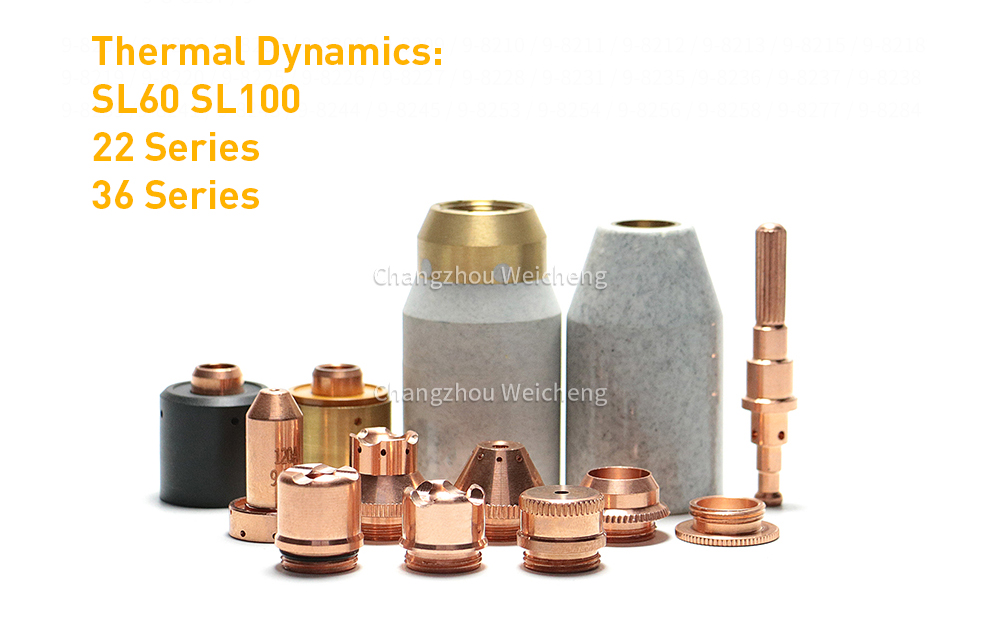
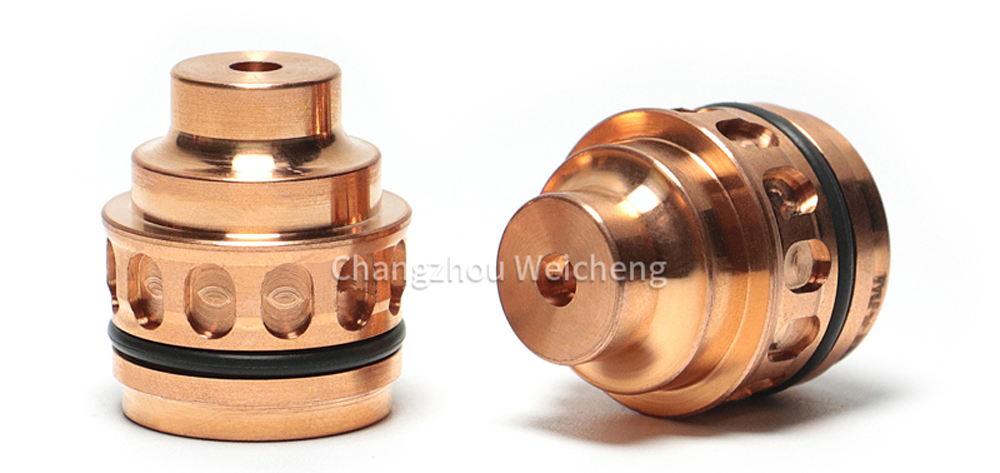
Advantages of the Thermal Dynamics 36-1050 Plasma Nozzle
The Thermal Dynamics 36-1050 Plasma Nozzle is engineered for precision, durability, and versatility in industrial plasma cutting. Below are its key advantages:
1。耐久性の向上
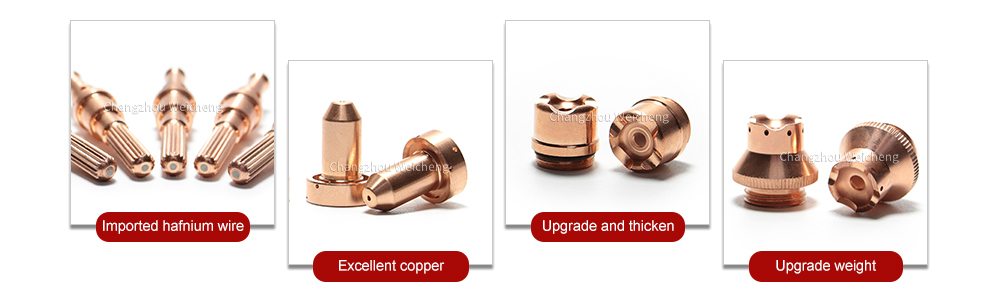
- 高温合金: から構築 copper-chromium-zirconium (CuCrZr) alloy, the nozzle withstands extreme plasma arc temperatures (up to 1,600°C)、長期間の使用による酸化や変形に耐性があります。
- Anti-Spatter Coating: A proprietary ceramic or nickel-plated surface minimizes molten metal buildup, extending nozzle lifespan by 30~40% 標準ノズルと比較して。
2。精密切断性能
- 最適化されたガス流設計: Features Vortex Gas Flow Technology for uniform plasma distribution, ensuring きれいでドロスのないカット on materials like:
- 炭素鋼: Up to 25mm thickness。
- ステンレス/アルミニウム: Up to 20mm thickness。
- 一貫したアーク安定性: Maintains focus at 40–80A, ideal for high-tolerance tasks in automotive, HVAC, or structural fabrication.
3. 幅広い互換性
- 熱力学システム: 36-1050 Plasma Nozzle is designed for CutMaster® series (e.g., CutMaster 52, 82) and SL60/SL100 torches。
- サードパーティの適応性: Works with select Hypertherm Powermax® (65/85) そして ESAB PT-36/PT-60 systems via verified adapters (check threading).
4. コスト効率
- ダウンタイムの短縮: Durable construction lowers replacement frequency, ideal for 24/7 production environments.
- Energy Savings: Efficient gas usage minimizes compressed air or nitrogen consumption by 15〜20%, reducing operational costs.
5. ユーザー中心の設計
- クイックチェンジの互換性: Tool-free installation simplifies replacements, minimizing workflow interruptions.
- 簡単なメンテナンス: Smooth internal geometry resists carbon buildup, requiring only basic cleaning with compressed air.
6. 理想的な用途
- 産業用製造: 36-1050 Plasma Nozzle cutting structural steel plates, machinery parts, and HVAC ducting.
- 自動車修理: Precision work on exhaust systems, chassis components, and body panels.
- メンテナンス & Field Work: Rugged performance in construction sites or shipyards with exposure to dust and humidity.
7. Environmental Benefits
- Reduced Waste: Longer lifespan decreases consumable disposal, supporting sustainability goals.
- 一貫したパフォーマンス: Lowers rework rates by delivering reliable, high-quality cuts.
Why Choose the 36-1050 Plasma Nozzle?
Combining advanced materials, precision engineering, and cost efficiency, the Thermal Dynamics 36-1050 Plasma Nozzle is a top choice for professionals seeking reliability in medium-duty industrial and automotive applications. Its OEM-certified design ensures compatibility and performance, making it indispensable for high-quality plasma cutting.

|
シールドガス販売業者
|
36-1273
|
シールドカップ
|
22-1016
|
|
シールドガス販売業者
|
36-1282
|
シールドキャップ
|
22-1025
|
|
シールドガス販売業者
|
36-1280
|
シールドガス
|
22-1272
|
|
シールドカップ
|
36-1018
|
プラズマガス分配器
|
22-1041
|
|
シールドリテーナー
|
36-1019
|
電極
|
22-1069
|
|
カートリッジ
|
36-1020
|
カートリッジ
|
22-1020
|
|
シールドカップ
|
36-1016
|
シールドキャップ
|
22-1027
|
|
シールドキャップ
|
36-1025
|
ノズル
|
22-1153
|
|
シールドキャップ
|
36-1028
|
電極
|
22-1171
|
|
シールドキャップ
|
36-1029
|
シールドキャップ
|
22-1030
|
|
シールドキャップ
|
36-1034
|
シールドガス販売業者
|
22-1285
|
|
シールドガス販売業者
|
36-1272
|
ノズル
|
22-1055
|
|
ノズル
|
36-1051
|
プラズマガス分配器
|
22-1042
|
|
ノズル
|
36-1053
|
電極
|
22-1075
|
|
ノズル
|
36-1060
|
カートリッジ
|
22-1022
|
|
ノズル
|
36-1055
|
シールドキャップ
|
22-1028
|
|
ノズル
|
36-1058
|
シールドキャップ
|
22-1275
|
|
ノズル
|
36-1064
|
ノズル
|
22-1054
|
|
プラズマガス分配器
|
36-1041
|
電極
|
22-1072
|
|
電極
|
36-1069
|
カートリッジ
|
22-1020
|
|
シールドキャップ
|
36-1027
|
ノズル
|
21-1052
|
|
電極
|
36-1071
|
ノズル
|
21-1055
|
|
電極
|
36-1089
|
電極
|
21-1075
|
|
電極
|
36-1085
|
電極
|
21-1093
|
|
シールドガス販売業者
|
36-1273
|
ノズル
|
21-1152
|
|
シールドガス販売業者
|
21-1272
|
ノズル
|
21-1153
|
|
シールドガス販売業者
|
21-1285
|
電極
|
21-1170
|
|
ぜひご連絡ください!
|
電極
|
21-1171
|
|
Compatibility, materials and application analysis of Thermal Dynamics 36-1050 Plasma Nozzle
Material Characteristics and Compatibility
-
Core Material Selection
36-1050 Plasma Nozzle’s primary structure typically employs high-temperature-resistant metal alloys, such as nickel-based superalloys, to ensure stability and corrosion resistance under extreme thermal conditions. To enhance wear resistance and thermal shock resilience, ceramic coatings like zirconia (ZrO₂) are often applied to critical surfaces exposed to high-wear operations. Compatibility between materials is validated through thermal expansion coefficient testing, ensuring minimal mismatches (e.g., within ±0.1 μm/m·°C tolerance) to prevent deformation or failure during thermal cycling. -
Thermodynamic Performance Validation
Key metrics for evaluating material durability in plasma environments include thermal conductivity decay rates (measured within ±3% accuracy) and oxidation weight gain rates (tested at 0.01 mg/cm²·h precision). Phase transition temperatures are monitored using high-resolution instruments (e.g., 0.5°C resolution) to detect crystalline structure changes, ensuring stability across operational temperature ranges.
Application Scenario Analysis
-
Industrial Cutting and Welding
Dynamic mechanical analysis (e.g., ASTM D7896 standards) is applied to assess mechanical property variations under cyclic thermal loads, ensuring long-term reliability. Tools like the TA Instruments Q400 thermomechanical analyzer are used to measure thermal expansion coefficients, optimizing compatibility between the nozzle and auxiliary components. -
Extreme Environment Suitability
For nuclear or aerospace applications, materials undergo rigorous testing using instruments like the Netzsch STA 449 simultaneous thermal analyzer. This evaluates thermal decomposition behavior in inert or oxidizing atmospheres. Non-contact infrared thermography (e.g., Shimadzu AIM-9000) provides real-time temperature field monitoring to prevent localized overheating during operation.
Compatibility Testing Standards
- Thermocouple systems are calibrated to ASTM E1137 standards to maintain temperature control precision during plasma processes.
- Differential scanning calorimetry (ISO 11357-3) determines material melting points, enabling optimization of operational temperature limits.


レビュー
レビューはまだありません。