
Plasma cutting has revolutionized metal fabrication, offering speed, precision, and versatility unmatched by traditional methods. Whether you’re crafting intricate metal art or fabricating industrial machinery, understanding what materials can be cut with plasma is critical to achieving optimal results. This guide explores the full spectrum of plasma-cuttable materials, the science behind the process, best practices for different metals, and even limitations to keep in mind.

How Plasma Cutting Works: The Science Behind the Spark
Plasma cutting relies on ionized gas (plasma) to melt and eject metal. Here’s a breakdown of the process:
- Ionization: A high-voltage arc between the torch’s electrode and workpiece ionizes compressed gas, creating plasma.
- Heat Generation: The plasma jet reaches temperatures up to 30,000°F (16,600°C), melting the metal.
- Material Ejection: High-velocity gas blows molten metal away, creating a clean cut.
Key components include:
- Power Supply: Stabilizes the arc (e.g., Hypertherm’s Powermax series).
- Torch Consumables: Nozzles, electrodes, and swirl rings direct the plasma stream.
- Gas Source: Air, nitrogen, or specialty gases like argon-hydrogen.
Materials Compatible with Plasma Cutting
Plasma cutting excels on electrically conductive metals. Below, we explore the most common materials, their challenges, and solutions.
1. Mild Steel: The Go-To Metal for Plasma
- Why It’s Ideal: Low-carbon steel’s uniform composition allows smooth, fast cuts.
- Thickness Range:
- DIY Cutters: Up to ½ inch (12 mm) at 40–60 amps.
- Industrial Systems: Up to 6 inches (150 mm) at 400+ amps (e.g., Hypertherm XPR300).
- Best Practices:
- Use compressed air for cost-effective cutting.
- Increase speed on thin sheets to prevent warping.
2. Stainless Steel: Precision Over Power
- Challenges: Chromium content causes oxidation, leading to discolored edges and slag.
- Solutions:
- Gas Choice: Nitrogen or argon-hydrogen reduces oxidation.
- Consumables: Hypertherm’s Duramax nozzles improve edge quality.
- Applications: Food-grade equipment, medical devices.
3. Aluminum: Speed and Heat Management
- Unique Properties: High thermal conductivity and a reflective oxide layer.
- Cutting Tips:
- Gas: Argon-hydrogen blends prevent edge roughness.
- Amperage: Use 85+ amps for thicknesses over ¼ inch (6 mm).
- Speed: Cut faster to avoid heat buildup and warping.
- Use Cases: Aerospace components, automotive panels.
4. Copper and Brass: Proceed with Caution
- Challenges: Soft metals cause erratic arcs and rapid consumable wear.
- Workarounds:
- Lower amperage (40–60A) and slower speeds.
- Replace nozzles twice as often as with steel.
- Applications: Electrical components, decorative art.
5. Specialty Metals
- Titanium: Requires inert gases (argon) to prevent combustion. Common in aerospace.
- Galvanized Steel: Cut outdoors or with ventilation to avoid toxic zinc fumes.
- Cast Iron: Possible but generates heavy slag; oxy-fuel is often preferred.
Materials That Cannot Be Cut with Plasma
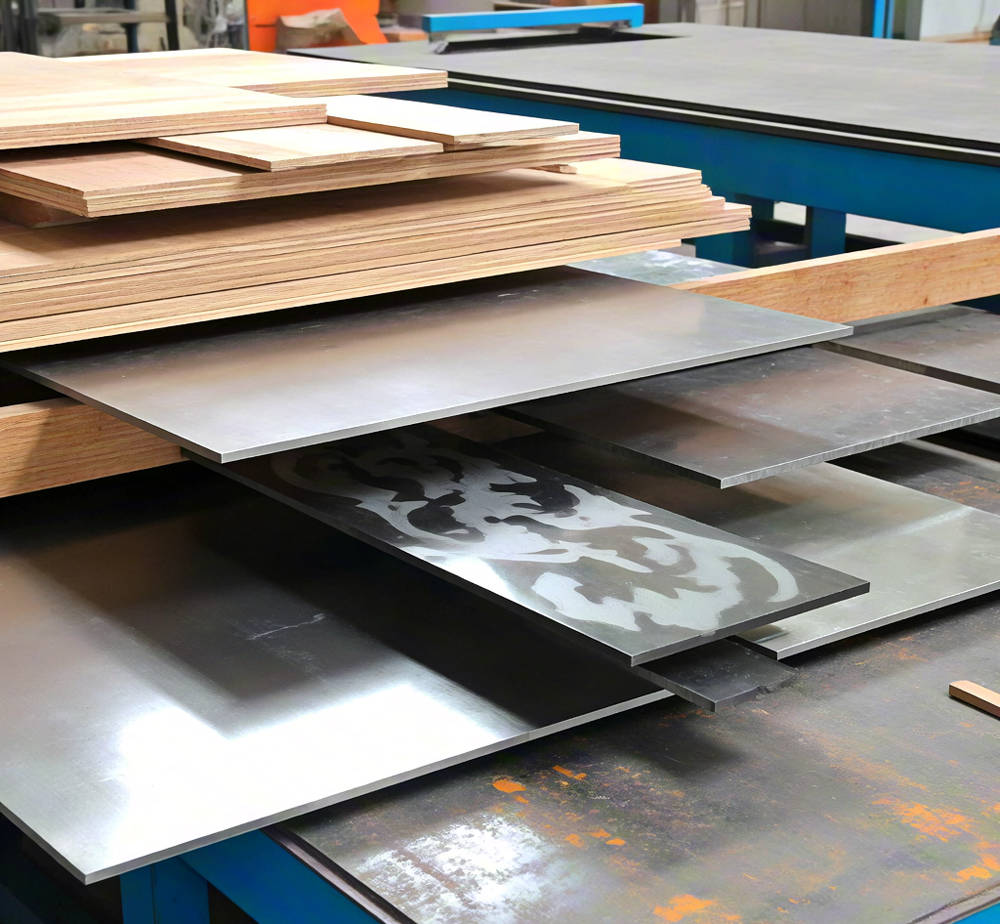
Plasma cutting is limited to conductive metals. Avoid these materials:
- Non-Conductive: Wood, plastic, glass, ceramics.
- Hazardous: Lead (toxic fumes), magnesium (flammable).
- Abrasive: Concrete, stone (damage torch components).
For non-metals, consider alternatives like waterjet cutting or laser systems.
Why Plasma Cutting Outperforms Other Methods
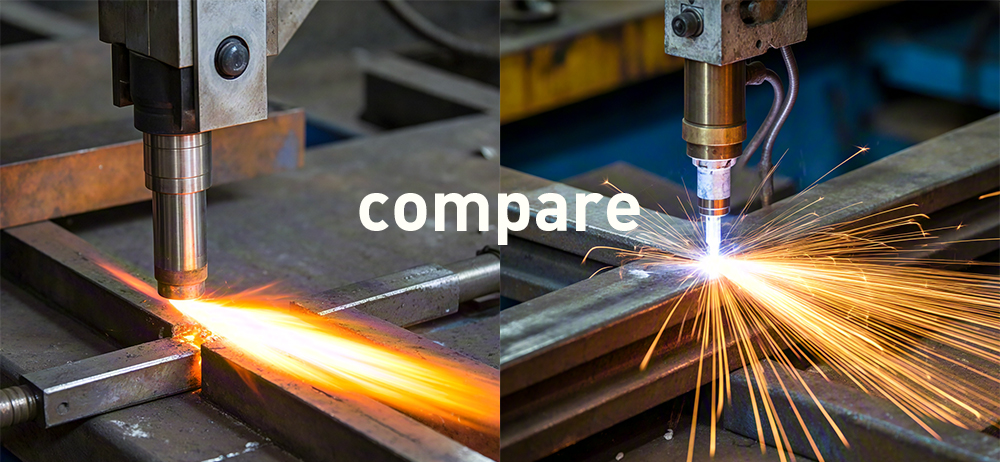
Understanding plasma’s advantages helps justify its use in specific scenarios:
1. Speed and Efficiency
- Plasma vs. Oxy-Fuel: Cuts 3x faster on thin steel (e.g., ¼-inch steel at 120 IPM vs. 40 IPM).
- Plasma vs. Laser: More cost-effective for materials under 1 inch (25 mm).
2. Versatility
- Handles rusted, painted, or uneven surfaces without pre-cleaning.
- Works in outdoor or dirty environments where lasers struggle.
3. Precision
- CNC Plasma Systems: Achieve tolerances of ±0.1 mm for intricate designs.
- Bevel Cutting: Advanced torches cut angles up to 45° for welding prep.
4. Cost Savings
- Lower upfront costs than fiber lasers
- Reduced energy consumption compared to waterjet systems.
For a detailed comparison, visit Lincoln Electric’s Cutting Guide.
Optimizing Plasma Cutting for Different Materials
Tailor your setup to each metal for cleaner cuts and longer consumable life.
Step 1: Gas Selection Guide
| Material | Recommended Gas | Purpose |
|---|---|---|
| Mild Steel (≤1″) | Compressed Air | Budget-friendly, minimal maintenance |
| Stainless Steel | Nitrogen | Reduces oxidation and slag |
| Aluminum | Argon-Hydrogen (65/35) | Smoother edges, less dross |
| Titanium | Argon | Prevents combustion |
Step 2: Amperage and Speed Settings
| Material | Thickness | Amperage | Speed (IPM) | Gas Pressure (PSI) |
|---|---|---|---|---|
| Mild Steel | ¼” (6 mm) | 45A | 120 | 70–80 |
| Aluminum | ½” (12 mm) | 85A | 60 | 90–100 |
| Stainless | ¾” (19 mm) | 65A | 45 | 80–90 |
Note: Always consult your equipment manual for exact settings.
Step 3: Consumable Maintenance
- Daily Checks: Clean nozzle orifices with a reamer to remove debris.
- Signs of Wear:
- Electrode: Deep pits or cracked emitter tip.
- Nozzle: Enlarged or oval-shaped orifice.
- Replacement Kits: Use OEM parts like Miller’s Consumable Kits for reliability.
Industrial vs. Hobbyist Plasma Cutters: Key Differences
| Feature | Industrial Plasma Cutters | Hobbyist Plasma Cutters |
|---|---|---|
| Max Thickness | 6+ inches (150 mm) | ½–1 inch (12–25 mm) |
| Power Requirements | 3-Phase 480V | 120V/240V Single-Phase |
| Precision | CNC automation, ±0.1mm tolerance | Manual operation, ±1mm tolerance |
| Cost | 15,000–15,000–100,000+ | 1,000–1,000–5,000 |
| Example Models | Hypertherm XPR300, ESAB Powercut 200 | Hobart Airforce 40i, Lotos LT5000D |
Safety Tips for Plasma Cutting
- Ventilation: Always cut in well-ventilated areas to avoid inhaling fumes (e.g., zinc from galvanized steel).
- PPE: Wear flame-resistant gloves, safety glasses with UV protection, and hearing protection.
- Fire Prevention: Keep a Class C fire extinguisher nearby for electrical fires.
- Grounding: Secure the workpiece with a clamp to prevent arc strikes.
For OSHA-compliant guidelines, visit American Welding Society.
Real-World Applications of Plasma Cutting
- Automotive Repair: Cutting exhaust systems, body panels, and brackets.
- Construction: Fabricating I-beams, railings, and HVAC components.
- Art and Signage: Creating decorative metal sculptures and custom signage.
- Shipbuilding: Cutting thick hull plates and structural components.
Case Study: A Texas-based workshop reduced production time by 35% after switching to a Hypertherm Powermax85 for stainless steel kitchen equipment.
Future Trends in Plasma Cutting
- Hybrid Systems: Combining plasma with waterjet or laser for multi-material projects.
- AI Integration: Smart sensors adjusting gas flow and speed in real time.
- Eco-Friendly Gases: Hydrogen-based blends to reduce carbon footprints.
Application of plasma cutting on non-metallic materials

1.Current application of plasma cutting on non-metallic materials
Although plasma cutting technology was originally designed for metal materials, in recent years, with the continuous improvement and innovation of technology, it has also begun to be gradually applied to the cutting and processing of non-metallic materials. Some non-metals such as plastics, rubber and certain composite materials will melt or vaporize at high temperatures, which makes them theoretically possible to be cut with plasma technology. However, due to the wide variety and different properties of non-metallic materials, not all non-metallic materials are suitable for plasma cutting. In practical applications, plasma cutting technology has been successfully applied to some specific non-metallic material cutting scenarios.
2.Specific application of plasma cutting on non-metallic materials
1.Plastic cutting
In the plastic manufacturing industry, plasma cutting technology is widely used for precise cutting of plastic sheets. Compared with traditional mechanical cutting or laser cutting, plasma cutting technology has the advantages of fast speed, high efficiency and low cost. At the same time, plasma cutting can also produce relatively smooth cuts, reducing subsequent processing steps and costs. For example, in the manufacture of automotive parts, plasma cutting technology can be used to cut plastic parts of various shapes, such as dashboards, door interior panels, etc.
2.Rubber cutting
In the automotive industry, plasma cutting technology is also used to cut materials such as rubber sealing strips. Rubber materials have certain elasticity and viscosity, and traditional cutting methods often find it difficult to achieve the ideal cutting effect. Plasma cutting technology can easily meet this challenge and achieve precise and fast cutting. In addition, plasma cutting can also produce relatively smooth incisions, reducing the waste of rubber materials and subsequent processing costs.
3.Composite material cutting
In addition to plastics and rubber, plasma cutting technology is gradually being applied to the cutting of composite materials. Composite materials have the advantages of high strength, light weight, and corrosion resistance, and are widely used in aerospace, automobile manufacturing and other fields. However, the cutting of composite materials has always been a difficult problem. Traditional cutting methods often find it difficult to achieve the ideal cutting effect, and are prone to defects such as cracks and delamination. Plasma cutting technology can overcome these shortcomings and achieve precise and fast cutting. For example, in the aerospace field, plasma cutting technology can be used to cut composite parts of various shapes, such as wings, fuselages, etc.
3.Technical Challenges and Solutions of Plasma Cutting Non-metallic Materials
Although plasma cutting technology has broad application prospects in non-metallic materials, it still faces some technical challenges in actual application. For example, the physical properties of non-metallic materials such as thermal conductivity and melting point are significantly different from those of metal materials, which requires plasma cutting equipment to be adjusted and optimized in terms of parameter settings and control systems. In addition, non-metallic materials may produce harmful gases and smoke during the cutting process, and effective protective measures need to be taken to ensure the safety of operators.
Conclusion
Plasma cutting’s ability to slice through steel, aluminum, stainless steel, and more makes it indispensable in modern fabrication. By selecting the right gas, optimizing settings, and maintaining equipment, users achieve clean, efficient cuts across industries. While limitations exist for non-conductive materials, plasma remains a top choice for its speed, versatility, and cost-effectiveness.
For those ready to invest, explore industrial-grade systems at Travers Tool or find DIY options at Harbor Freight.