

Der sichere Einsatz eines Plasmaschneiders ist von größter Bedeutung. Seit mehr als einem halben JahrhundertPlasmaabschneiden hat sich in unzähligen Branchen als entscheidendes Hilfsmittel erwiesen. Dieser Artikel bietet wichtige Anleitungen und Methoden für sicheres Plasmaschneiden.
Entdecken Sie Sicherheitsprotokolle.1
Plasmaschneider erfordern aufgrund ihrer beträchtlichen Spannung und der enormen Hitze des Plasmalichtbogens eine vorsichtige Bedienung. Das Tragen persönlicher Schutzausrüstung (PSA) ist unbedingt erforderlich. Dazu gehören ein Schweißhelm, eine Schutzbrille, flammhemmende Kleidung und Gehörschutz.3
Treffen Sie bei Arbeiten mit feuergefährdeten Materialien oder in Umgebungen mit brennbaren Gasen zusätzliche Sicherheitsmaßnahmen, um Brandrisiken zu vermeiden. Stellen Sie sicher, dass Ihre Arbeitsumgebung über eine ausreichende Belüftung verfügt, um das Risiko schädlicher Dämpfe von Substanzen wie verzinktem Stahl zu verringern.
Stellen Sie beim Betrieb von Plasmaschneidern immer einen Feuerlöscher in unmittelbarer Nähe auf. Stellen Sie sich auf eine Gummimatte und sorgen Sie für einen wasserfreien Arbeitsplatz, um einen Stromschlag zu vermeiden.2
Effektive Sicherheitsmaßnahmen schützen Sie und die Personen in Ihrer Nähe vor Verletzungen durch Brandgefahr, schädliche Gase und elektrische Vorfälle.
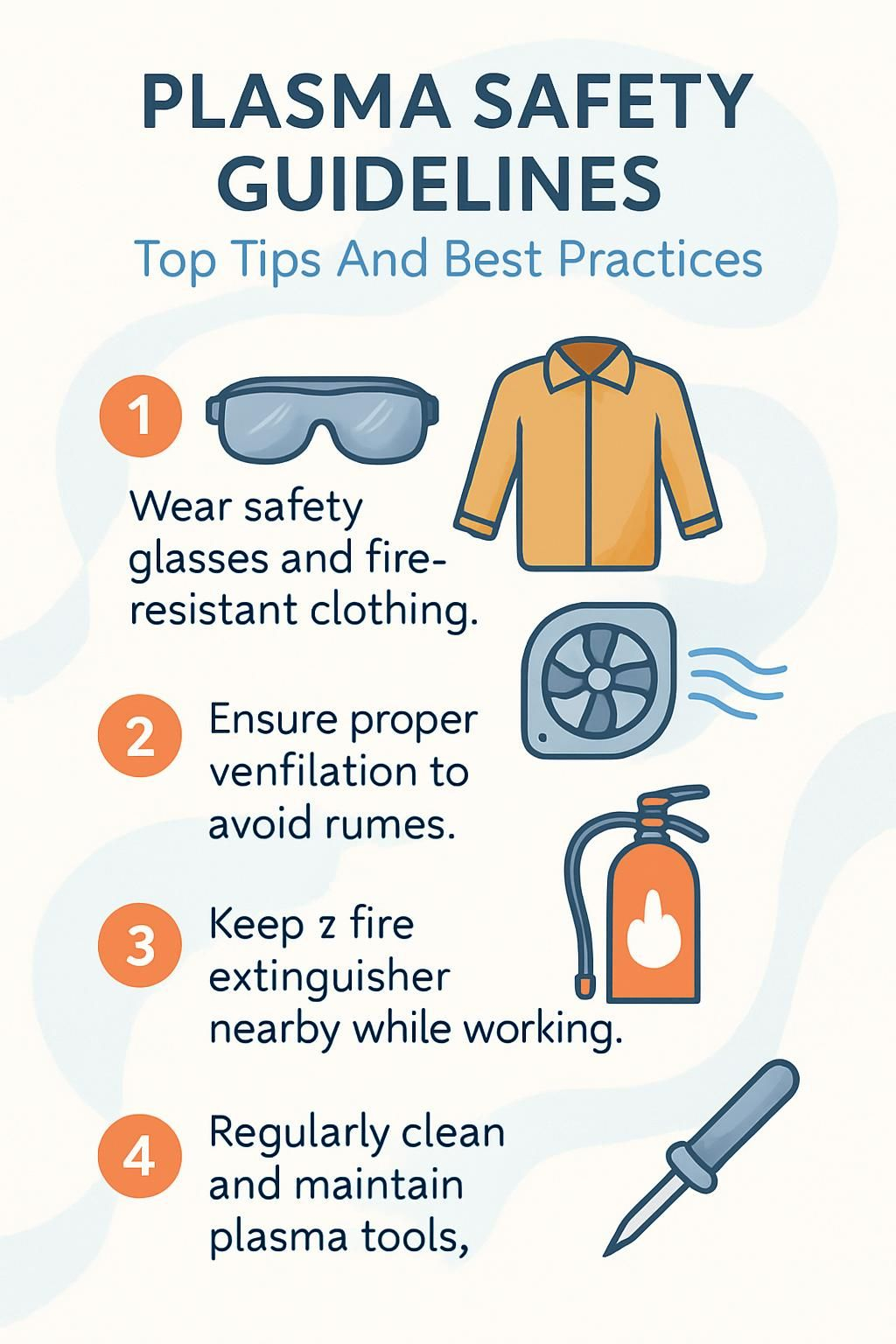
Plasmasicherheit verstehen
Beim Plasmaschneiden wird heißes Gas zum Schneiden von Metall verwendet. Diese Methode ist schnell, kostengünstig und funktioniert auf verschiedenen Metallen. Seit den 1990er Jahren erfreut es sich sowohl bei großen als auch bei kleinen Projekten zunehmender Beliebtheit, da es günstigere Maschinen gibt.
Sicherheit ist beim Plasmaschneiden aufgrund der hohen Spannung, der starken Hitze und des hellen Lichts von entscheidender Bedeutung. Tragen Sie einen Augenschutz wie eine Schutzbrille uswfeuerfeste Kleidung um Verbrennungen und Augenverletzungen vorzubeugen.
Auch eine gute Belüftung ist wichtig, um giftige Dämpfe zu entfernen.1
Hier sind wichtige Sicherheitstipps für die Verwendung eines Plasmaschneiders:
– Tragen Sie immer die richtige persönliche Schutzausrüstung (PSA), z. B. einen Schweißhelm für Ihre Augen, einen Gehörschutz gegen Lärmgefahren und Handschuhe.2
– Stellen Sie sicher, dass der Arbeitsbereich gut belüftet ist, um schädliche Gase zu entfernen.
– Halten Sie einen Feuerlöscher in der Nähe, da die Gefahr von Bränden besteht, wenn Funken auf brennbaren Stoffen landen.
– Wenn Sie längere Zeit an einem Ort stehen, verwenden Sie eine Gummimatte.
Diese Schritte helfen bei der Bewältigung von Risiken wie Stromschlag, Kontakt mit giftigen Gasen uswmögliche Brände beim Betrieb von Plasmaschneidern.
Wichtige Sicherheitsrichtlinien für das Plasmaschneiden
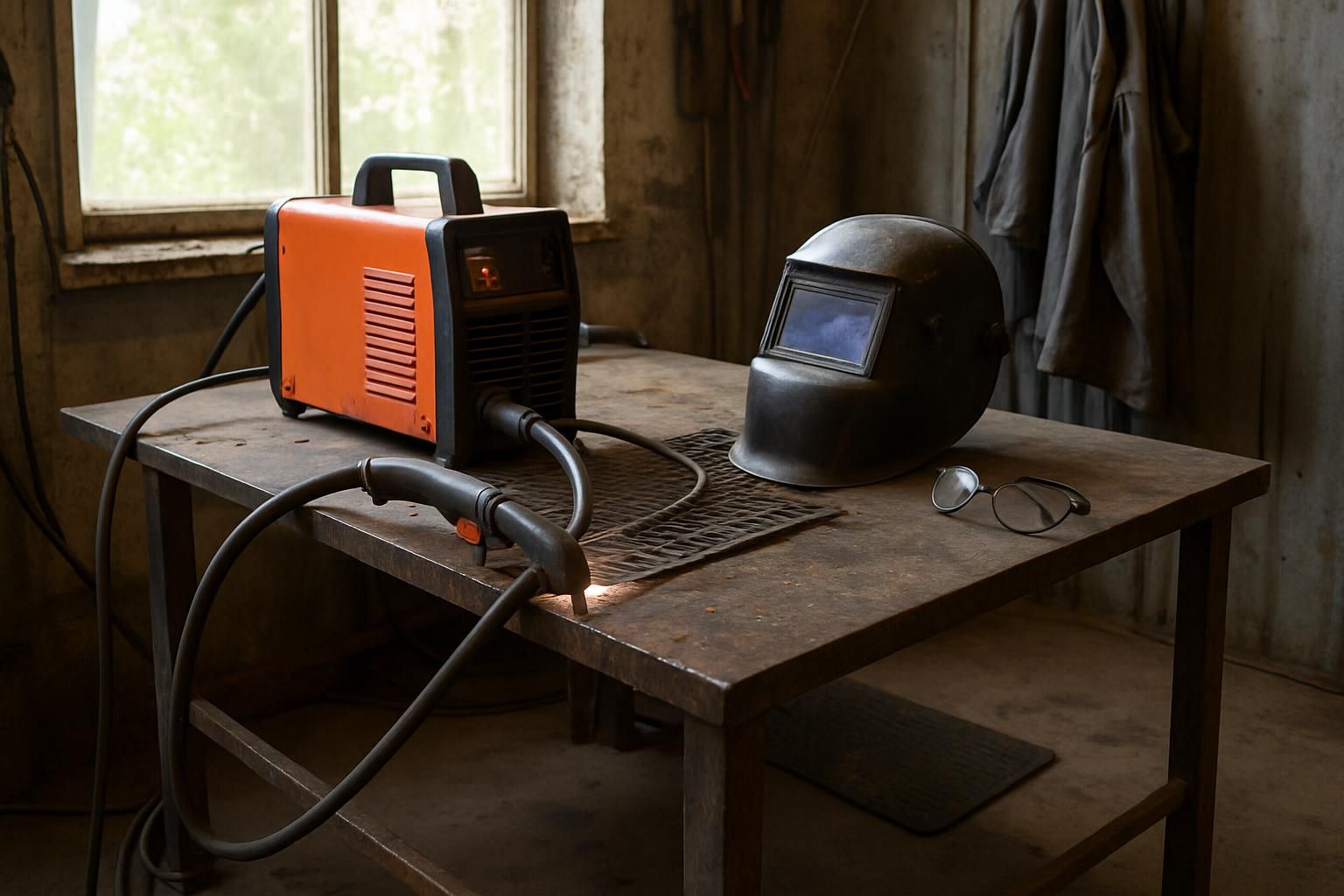
Verwenden Sie beim Plasmaschneiden eine Schutzbrille und einen Schweißhelm, um Ihre Augen zu schützen. Tragen Sie feuerfeste Kleidung, um Verbrennungen zu vermeiden. Sorgen Sie für eine gute Belüftung, um das Einatmen giftiger Dämpfe zu vermeiden, und stellen Sie sich auf eine Gummimatte, um sich vor Stromschlägen durch Hochspannungsgeräte zu schützen.
Tragen Sie geeignete Schutzausrüstung (PSA)
Tragen Sie beim Plasmalichtbogenschneiden eine Schutzbrille mit Seitenschutz, um Ihre Augen vor Funken und Schmutz zu schützen. Unter meiner normalen Brille ist einmal ein Funke gefunkt, was eine scharfe Lektion war.3
Tragen Sie zum Schutz des Körpers trockene, feuerfeste Kleidung wie Leder oder schwere Jeans. Wählen Sie Handschuhe aus dicht gewebtem Stoff für den sicheren Umgang mit heißen Metallen. Hohe Lederschuhe sind zum Schutz Ihrer Füße unerlässlich.4
Die Kleidung sollte gut sitzen, um Funkenbildung zu vermeiden. Dieser einfache Schritt hilft, Unfälle in der Werkstatt zu vermeiden.
Sorgen Sie für eine gute Belüftung, um giftige Dämpfe zu vermeiden
Wählen Sie zunächst die richtige Sicherheitsausrüstung zum Plasmaschneiden. Dazu gehören feuerfeste Kleidung, Schutzbrille, ein Schweißerhelm und Gehörschutz. Für die Entfernung ist ein guter Luftstrom von entscheidender Bedeutunggefährliche Gase aus Schneidstoffen.
Verwenden Sie Ventilatoren und Lüftungsöffnungen an Ihrem Arbeitsplatz. Verwenden Sie an kleinen Orten eine Luftmaske, die frische Luft ansaugt.5
Überprüfen Sie vor der Verwendung eines Plasmabrenners die Beschichtung des Metalls. Einige Beschichtungen erzeugen beim Erhitzen giftige Dämpfe. Schauen Sie sich immer die Sicherheitsdatenblätter (MSDS) für Metalle und deren Beschichtungen an, um das Einatmen schädlicher Substanzen zu vermeidenPlasmaschneidaufgaben.
Verhindern Sie Brandgefahren durch Vorbereitung des Arbeitsplatzes
Halten Sie beim Plasmaschneiden einen Abstand von mindestens 10 Metern zu brennbaren Materialien ein.3 Wenn ein Transport nicht möglich ist, schützen Sie sie mit feuerfesten Abdeckungen. Verschließen Sie alle kleinen Öffnungen, um das Eindringen von Funken zu verhindern.
Halten Sie einen Feuerlöscher in Reichweite, um schnell reagieren zu können.
Arbeiten Sie auf nichtleitenden Oberflächen wie Holz oder Gummimatten, um die Sicherheit zu erhöhen. Bei der Arbeit mit Plasmaschneidern oder Schweißbrennern ist der Einsatz feuerbeständiger Barrieren und sicherer Arbeitsflächen von entscheidender Bedeutung.
Dieser Ansatz minimiert die Brandgefahr und schützt Sie und andere in Bereichen, die anfällig für Funken und hohe Hitze sind.
Bleiben Sie geerdet, um einen Stromschlag zu vermeiden
Machen Sie Ihren Arbeitsplatz feuersicher und konzentrieren Sie sich dann auf die Vermeidung von Stromschlägen. Erden Sie den Plasmaschneider, um Stöße zu vermeidenNFPA 70- und OSHA-Richtlinien. Überprüfen Sie das Erdungskabel täglich; Ersetzen Sie es, wenn es beschädigt ist.6
Vermeiden Sie das Arbeiten in Nassbereichen. Verwenden Sie zur Isolierung trockene Gummimatten oder Sperrholz. Um die Sicherheit zu gewährleisten, ist bei Plasmaschneidern eine sorgfältige Verwendung erforderlich.7
Technologische Fortschritte in der Plasmasicherheit
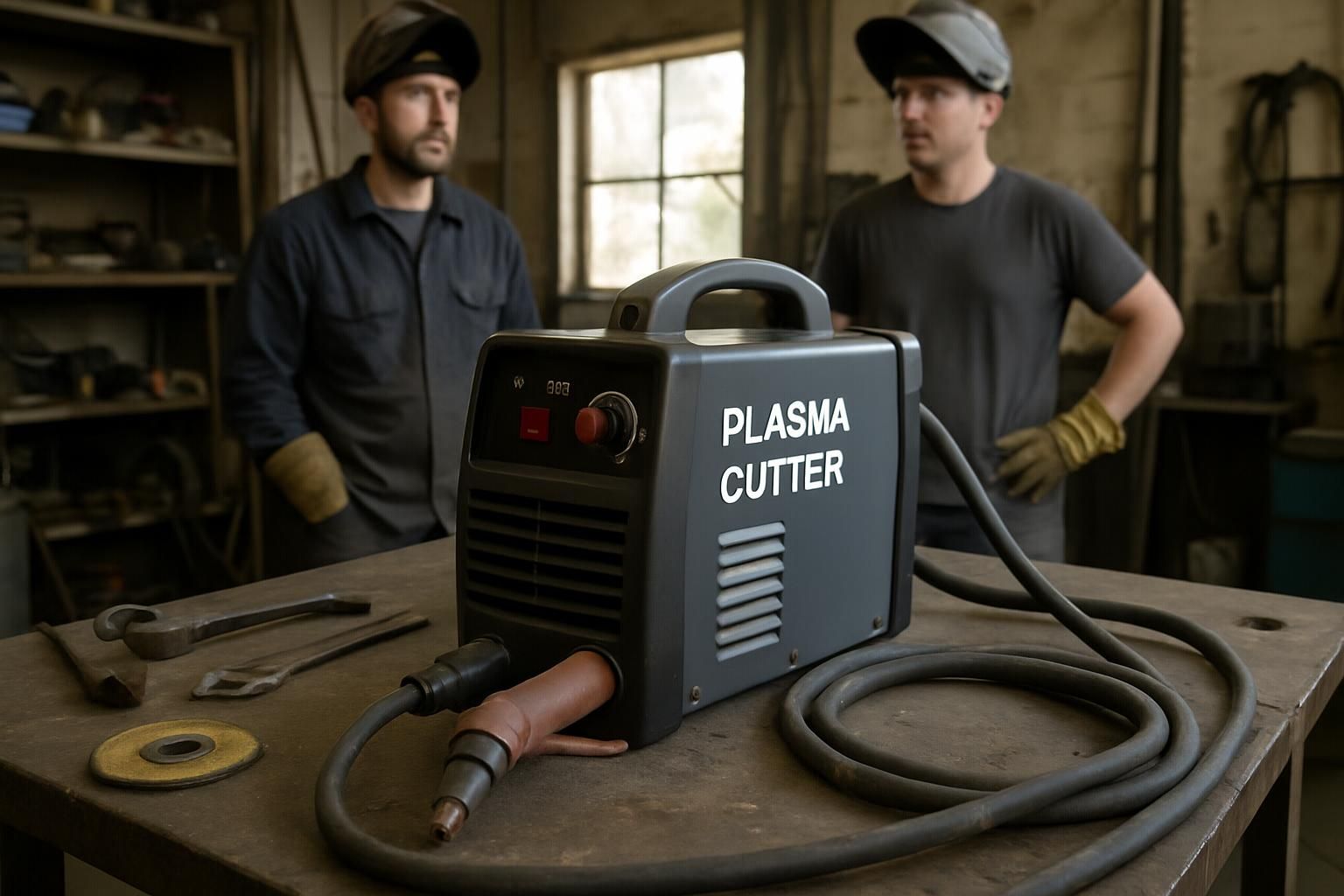
Plasmaschneider wurden seit Mitte der 1990er Jahre verbessert und sind tragbar und erschwinglicher geworden. Diese Werkzeuge verfügen jetzt über integrierte Sicherheitsfunktionen zum Schutz vor Verletzungen und Bränden durch Lichtbögen.8 Es ist wichtig, diese Sicherheitskomponenten regelmäßig zu überprüfen, um eine sichere Arbeitsumgebung zu gewährleistenSchneiden von Metallen wie Stahl oder Aluminium. Aufgrund des technologischen Fortschritts tragen Arbeitnehmer häufig Schutzkleidung und Schutzbrillen, um zusätzlichen Schutz zu bieten.
Wartungstipps für das Plasma schneiden Verbrauchsmaterialien
Warten Sie Ihre Plasmaschneidausrüstung für bessere Leistung und längere Lebensdauer. Nutzen Sie eine Checkliste für die tägliche Reinigung und führen Sie regelmäßige Inspektionen durch.9
- Reinigen Sie Ihre Werkzeuge täglich, um Staub und Metallrückstände zu entfernen.
- Regelmäßig prüfen Wirbelringe, Elektroden und Düsen auf Verschleiß. 9
- Düsen austauschen und Elektroden zusammen für präzise Schnitte.
- Überwachen Sie die Leistung des Schneiders; Wenn die Qualität nachlässt, überprüfen Sie Ihre Werkzeuge.
- Warten Sie das Kühlsystem, um eine Überhitzung zu vermeiden. 10
Sicherheitsmaßnahmen bei der Plasmaspende
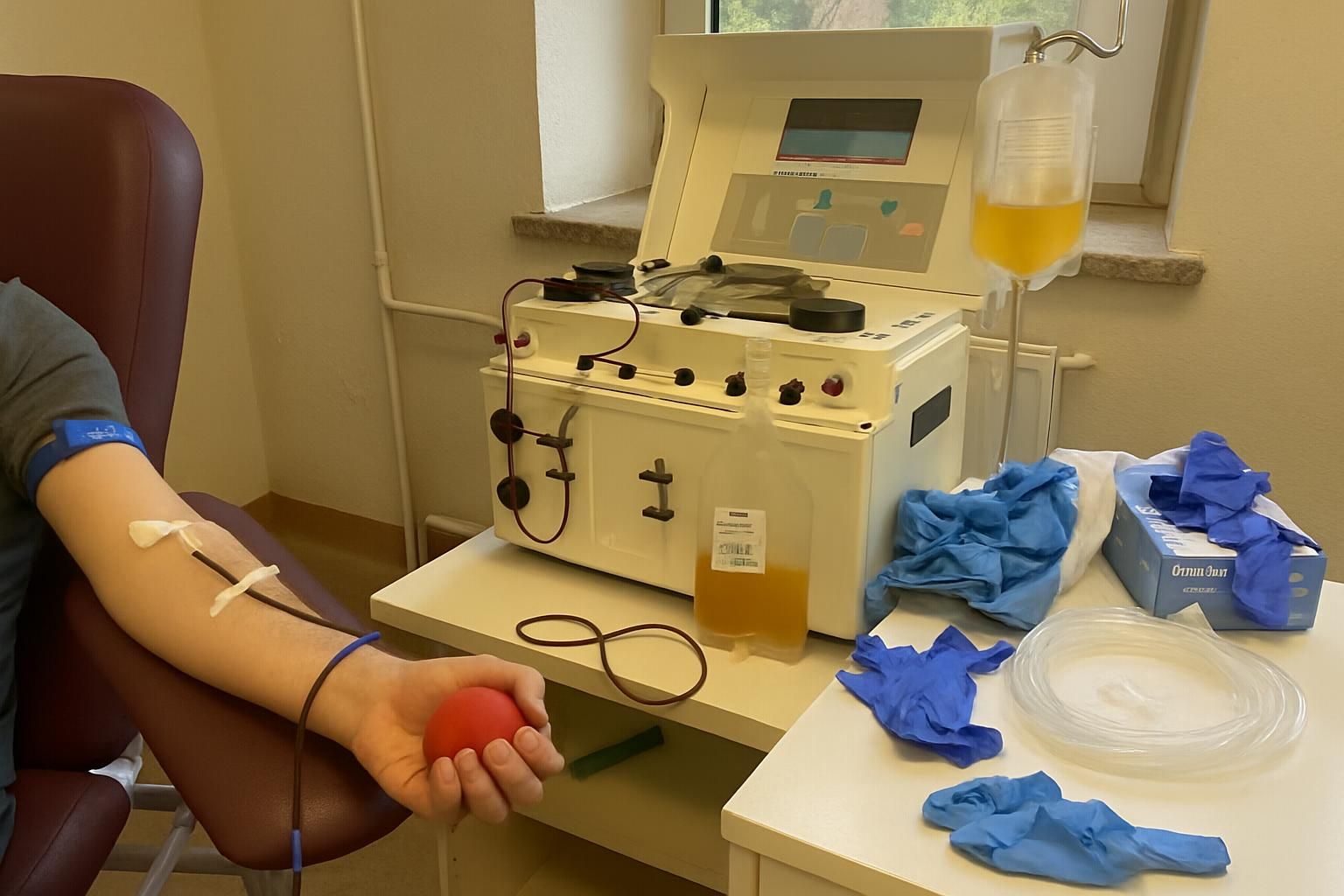
Zur Sicherheit bei der Plasmaspende gehören regelmäßige Gesundheitskontrollen der Spender und der Einsatz neuer Hilfsmittel für jede Person, um die Ausbreitung von Keimen zu verhindern. Dies trägt dazu bei, Leben sicher zu retten.
Routinemäßige Gesundheitschecks für Spender
Vor der Plasmaspende überprüfen medizinische Fachkräfte die Spender‘ Gesundheit genau. Sie suchen nach Anzeichen von Krankheiten oder medizinischen Beschwerden, die eine Spende riskant machen könnten. Mithilfe von Hilfsmitteln wie Blutdruckmanschetten und Thermometern stellen sie sicher, dass die Vitalfunktionen des Spenders normal sind.11
Es ist von entscheidender Bedeutung, Spender über mögliche Nebenwirkungen wie Müdigkeit oder Schwindelgefühle nach der Spende aufzuklären. Sauberkeit hat oberste Priorität; Das Personal wäscht sich stets gründlich die Hände und verwendet für jeden Spender frische Nadeln.
Nach der Spende werden Ratschläge gegeben, wie man gesund bleibt – Wasser trinken und sich nach Bedarf ausruhen –, um den Spendern zu helfen, sich schnell zu erholen und sicher zu Plasmatherapien beizutragen.
Einwegausrüstung zur Vermeidung von Kontaminationen
Einweginstrumente wie Nadeln hemmen die Übertragung von Keimen bei Plasmaspenden. Nur makellose, unberührte Gegenstände kommen mit dem Spender in Kontakt, eine Praxis, die Sicherheit garantiert.
Die Mitarbeiter bereiten die Geräte vor der Verwendung durch Sterilisation vor und bieten so den Spendern Sicherheit vor der Ansteckung mit Krankheiten durch andere.12
Die Vorschriften zur Gewährleistung der Sicherheit beim Umgang mit Blut sind streng. Das Krankenhauspersonal verwendet bei jedem Eingriff neue Handschuhe und gibt diese sofort nach Gebrauch wieder ab. Sie reinigen den Spendebereich sorgfältig, um eine mögliche Plasmakontamination oder die Ausbreitung von Krankheiten zu verhindern.
Lehren aus realen Vorfällen und Präventionstipps
Echte Vorfälle verdeutlichen wichtige Sicherheitspraktiken beim Plasmaschneiden und Plasmaspenden.
- Halten Sie brennbare Materialien vom Schneidbereich fern, um Brandgefahr zu vermeiden.
- Tragen Sie persönliche Schutzausrüstung wie Schutzbrillen, Schweißhelme und feuerfeste Kleidung zum Schutz vor Funken und heißem Metall.
- Sorgen Sie für eine gute Belüftung, um das Einatmen giftiger Dämpfe beim Plasmaschneiden zu vermeiden.
- Erden Sie Elektrowerkzeuge, um einen Stromschlag zu verhindern, indem Sie überschüssige Spannung sicher in den Boden leiten.
- Plasmaspender sollten sich regelmäßigen Gesundheitsuntersuchungen unterziehen, um ihre Eignung für eine Spende zu bestätigen und so die Sicherheit sowohl für Spender als auch für Empfänger zu gewährleisten. 13
- Verwenden Sie bei der Plasmaspende Nadeln und Röhrchen nur einmal, um die Ausbreitung von Infektionen zu verhindern.
- Machen Sie sich mit der Bedienung eines Feuerlöschers vertraut, wenn Sie mit Plasmaschneidern oder Schneidbrennern arbeiten.
- Lagern Sie komprimierte Gase ordnungsgemäß, um Explosionen zu vermeiden. Befestigen Sie die Kappen immer, wenn Sie sie nicht verwenden.
- Schützen Sie Ihr Gehör mit Gehörschutz wie Ohrstöpseln oder Ohrenschützern, um die Lärmgefahr durch Plasmaschneider zu minimieren.
- Seien Sie beim Schneiden von Materialien, die Schwermetalle enthalten, mit einem Plasmaschneider vorsichtig, da diese giftige Gase freisetzen können. 14
Diese Richtlinien basieren auf Beispielen aus der Praxis, bei denen die Nichtbeachtung dieser Vorsichtsmaßnahmen zu Unfällen oder Gesundheitsrisiken führte, was die Notwendigkeit von Wachsamkeit und angemessener Vorbereitung bei Plasmaverfahren unterstreicht.
Best Practices zur Aufrechterhaltung der Gerätesicherheit
Für den Fortschritt ist es entscheidend, Lehren aus den Fehlern der Vergangenheit zu ziehen. Jetzt konzentrieren wir uns darauf, unsere Plasmaschneideausrüstung im besten Zustand zu halten.
- Führen Sie tägliche Inspektionen an Ihrem Plasmaschneider durch. Achten Sie auf Anzeichen von Abnutzung oder Beschädigung. 15
- Stellen Sie sicher, dass sich im Schneidbereich keine brennbaren Materialien befinden. Dazu gehören Elemente wie Holz, Papier und Lösungsmittel. 1
- Bestätigen Sie die Wirksamkeit Ihres Feuerlöschers. Es sollte mit elektrischen Bränden kompatibel sein.
- Bei Schneidarbeiten sollten immer eine Schutzbrille und ein Schweißhelm getragen werden. Diese schützen Ihre Augen vor Funken.
- Verwenden Sie flammenbeständige Kleidung, um sich vor Verbrennungen durch erhitztes Metall zu schützen.
- Stellen Sie sicher, dass alle komprimierten Gase sicher außerhalb des Schneidbereichs aufbewahrt werden.
- Sorgen Sie für eine wirksame Erdung Ihrer Geräte, um Stöße zu vermeiden. Dies erfordert den Anschluss an eine echte Erdung. 1
- Sorgen Sie für eine gute Belüftung des Bereichs, um schädliche Dämpfe und Gase beim Schneiden zu entfernen.
- Platzieren Sie brennbare Stoffe in sicherer Entfernung, um die Brandgefahr beim Plasmalichtbogenschneiden auszuschließen.
- Übersehen Sie nicht die Bedeutung des Gehörschutzes aufgrund der Gefahren durch Lärm.
Jede Maßnahme basiert auf dem Verständnis dessen, was sich über einen bestimmten Zeitraum als optimal erweist, um die Benutzersicherheit beim Betrieb leistungsstarker Werkzeuge wie Plasmaschneider zu gewährleisten.
Abschluss
Plasmaschneiden ist ein nützliches Werkzeug. Um sicher zu bleiben, tragen Sie die richtige Sicherheitsausrüstung und sorgen Sie für eine gute Belüftung Ihres Bereichs. Überprüfen Sie immer, ob alles ordnungsgemäß funktioniert, und berühren Sie keine elektrischen Teile, um Stromschläge zu vermeiden.
Aus den Fehlern der Vergangenheit zu lernen, erhöht die Sicherheit für alle. Das Befolgen dieser Sicherheitstipps hilft Benutzern, Plasmawerkzeuge sicher und ohne Verletzungen zu handhaben.
FAQs
1. Welche Sicherheitsrichtlinien gibt es beim Plasmaschneiden?
Zu den Sicherheitsrichtlinien beim Plasmaschneiden gehört die Verwendung persönlicher Schutzausrüstung wie einer Schutzbrille, eines Schweißhelms und feuerfester Kleidung. Es ist außerdem wichtig, brennbare Materialien zu vermeiden und sich der möglichen Brandgefahr bewusst zu sein.
2. Wie kann ich mich beim Plasmaschneiden vor giftigen Dämpfen schützen?
Beim Plasmalichtbogenschneiden sollten Sie für eine ausreichende Belüftung sorgen, um eine Exposition gegenüber giftigen Gasen zu vermeiden. Auch das Tragen persönlicher Schutzausrüstung wie eines Schweißhelms kann zum Schutz vor diesen Dämpfen beitragen.
3. Welche Ausrüstung ist für den sicheren Einsatz eines Plasmaschneiders erforderlich?
Für die sichere Verwendung eines Plasmaschneiders wird das Tragen einer Schutzbrille, eines Gehörschutzes zum Schutz vor Lärmgefahren und feuerfester Kleidung aufgrund der Gefahr von Spritzern geschmolzenen Metalls empfohlen.
4. Gibt es besondere Verfahren oder Vorsichtsmaßnahmen beim Arbeiten mit Hochspannung beim Plasmalichtbogenschneiden?
Beim Arbeiten mit hohen Spannungen beim Plasmalichtbogenschneiden ist es wichtig, die nationalen Elektrovorschriften einzuhalten und vorbeugende Maßnahmen wie die Verwendung von Gummimatten oder anderen Isoliermaterialien unter den Füßen zu ergreifen.
5. Kann verzinkter Stahl mit einem Plasmaschneider sicher geschnitten werden?
Ja! Bedenken Sie jedoch, dass verzinkter Stahl beim Schneiden mit heißem Plasma giftige Dämpfe abgibt. Treffen Sie daher die erforderlichen Vorsichtsmaßnahmen wie gute Belüftung und das Tragen geeigneter persönlicher Schutzausrüstung (PSA).
6. Ist eine spezielle Schulung erforderlich, bevor ich Werkzeuge wie Autogenbrenner oder Butanfeuerzeuge in Verbindung mit meinem Plasmaschneider verwende?
Absolut! Vor dem Umgang mit diesen Werkzeugen ist eine entsprechende Schulung unerlässlich, da sie brennbare Gase enthalten, die bei unsachgemäßer Handhabung zu Unfällen führen können.
Referenzen
- ^ https://cksupply.com/plasma-cutter-safety/ (18.11.2019)
- ^ https://www.fastcutcnc.com/post/plasma-table-safety-tips
- ^ https://www.sunbeltrentals.com/resources/blog/industrial-tool/plasma-cutting-safety/
- ^ https://wholesale.yeswelder.com/blog/plasma-cutting-safety-measures/
- ^ https://www.cyriousmetalworks.com/plasma-cutter-ventilation-requirements/ (20.05.2023)
- ^ https://www.shopsabre.com/cnc-plasma-cutter-safety-tips/ (27.07.2020)
- ^ https://thermacut.com/en-us/__trashed/ (25.11.2024)
- ^ https://www.sciplasma.com/post/safety-considerations-plasma-cleaning
- ^ https://blog.red-d-arc.com/plasma-cutting/reduce-wear-tear-plasma (10.11.2023)
- ^ https://esab.com/us/nam_en/esab-university/blogs/maintenance-of-plasma-cutting-machine-a-step-by-step-guide/
- ^ https://olgam.com/understanding-the-safety-measures-in-plasma-donation/ (13.06.2024)
- ^ https://www.kedplasma.us/plasma-donation-centers-safe-what-you-need-to-know-about-safety-protocols/
- ^ https://pmc.ncbi.nlm.nih.gov/articles/PMC3356109/
- ^ https://pmc.ncbi.nlm.nih.gov/articles/PMC2655764/
- ^ https://www.koike.com/blog/best-practices-for-handling-a-plasma-cutting-torch/?srsltid=AfmBOor3r7mprla75nGCrbDJ8Cb3APHEtScm29mIitBRFZmyciDTk5cs (15.01.2025)

