

Det er yderst vigtigt at bruge en plasmaskærer sikkert. I mere end et halvt århundrede,plasmaskæring har stået som et afgørende redskab på tværs af utallige brancher. Denne artikel tilbyder vital vejledning og metoder til sikker plasmaskæring.
Fortsæt for at finde sikkerhedsprotokoller.1
Plasmaskærere nødvendiggør forsigtige operationer på grund af deres bemærkelsesværdige spænding og den formidable varme fra plasmabuen. Det er vigtigt at iføre sig personligt beskyttelsesudstyr (PPE), der omfatter en svejsehjelm, sikkerhedsbriller, brandsikker påklædning og høreværn.3
Under drift med brandtilbøjelige materialer eller i miljøer med brændbare gasser, skal du træffe ekstra sikkerhedsforanstaltninger for at omgå brandrisici. Sørg for, at dit arbejdsmiljø har tilstrækkelig ventilation for at mindske risikoen for skadelige dampe fra stoffer som galvaniseret stål.
Placer altid en ildslukker i umiddelbar nærhed, når du betjener plasmaskærere. Placer dig selv på en gummimåtte, og hold et vandfrit arbejdsområde for at undgå elektrisk stød.2
Effektive sikkerhedsprocedurer beskytter dig og også dem i din nærhed mod skader forbundet med brandfare, eksponering for skadelig gas og elektriske hændelser.
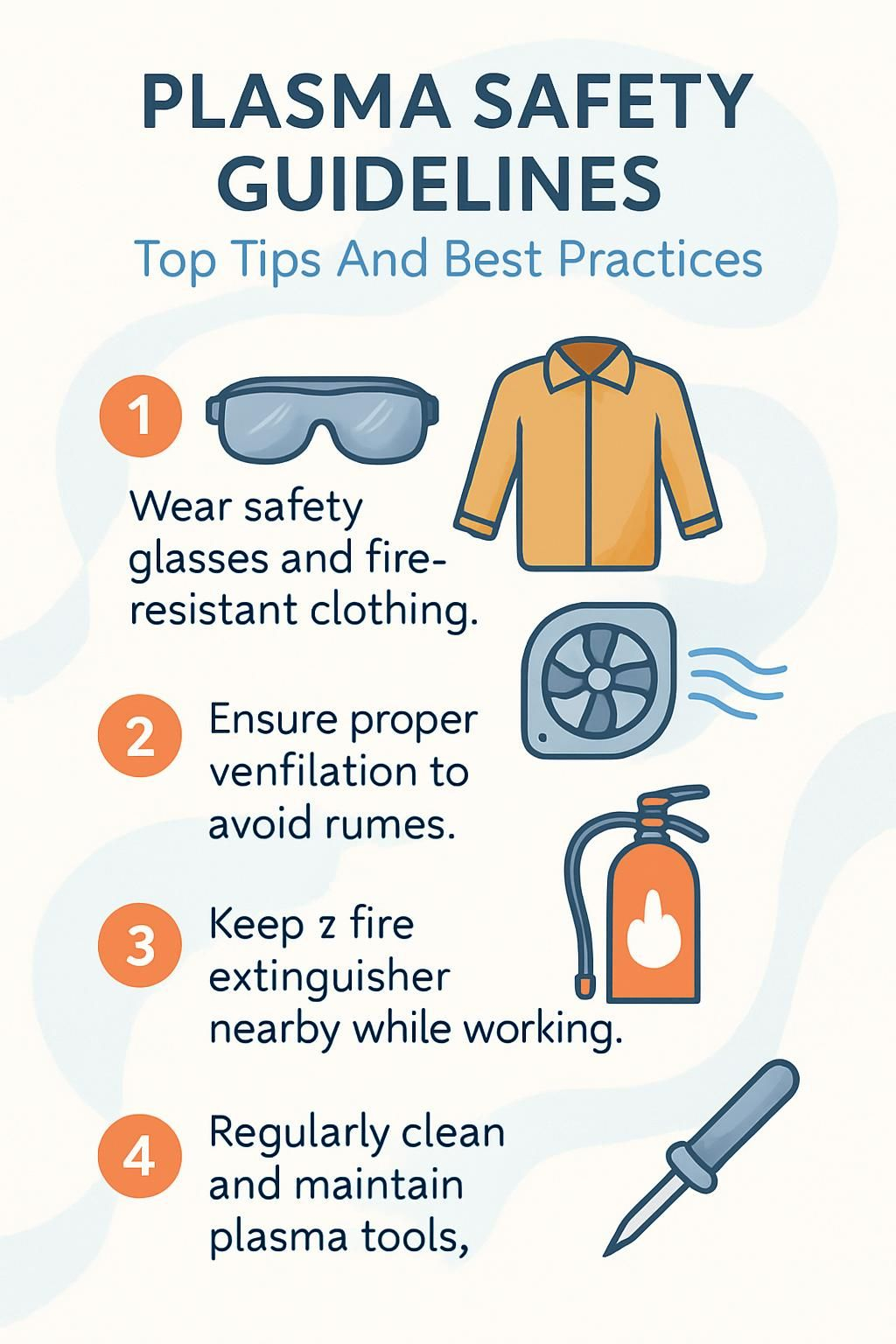
Forståelse af plasmasikkerhed
Plasmaskæring bruger varm gas til at skære metal. Denne metode er hurtig, omkostningseffektiv og virker på forskellige metaller. Det er vokset i popularitet til både store og små projekter siden 1990'erne med mere overkommelige maskiner.
Sikkerhed er afgørende under plasmaskæring på grund af høj spænding, intens varme og skarpt lys. Bær øjenværn som sikkerhedsbriller ogbrandsikkert tøj for at forhindre forbrændinger og øjenskader.
God ventilation er også vigtig for at fjerne giftige dampe.1
Her er vigtige sikkerhedstip til brug af en plasmaskærer:
– Bær altid de korrekte personlige værnemidler (PPE), såsom en svejsehjelm til dine øjne, høreværn mod støjfare og handsker.2
– Sørg for, at arbejdsområdet er godt ventileret for at fjerne skadelige gasser.
– Keep a fire extinguisher close by because of the risk of fires from sparks landing on combustibles.
– Use a rubber mat when standing in one place for long periods.
These steps help manage risks like electrical shock, exposure to toxic gases, andpotential fires while operating plasma cutters.
Key Safety Guidelines for Plasma Cutting
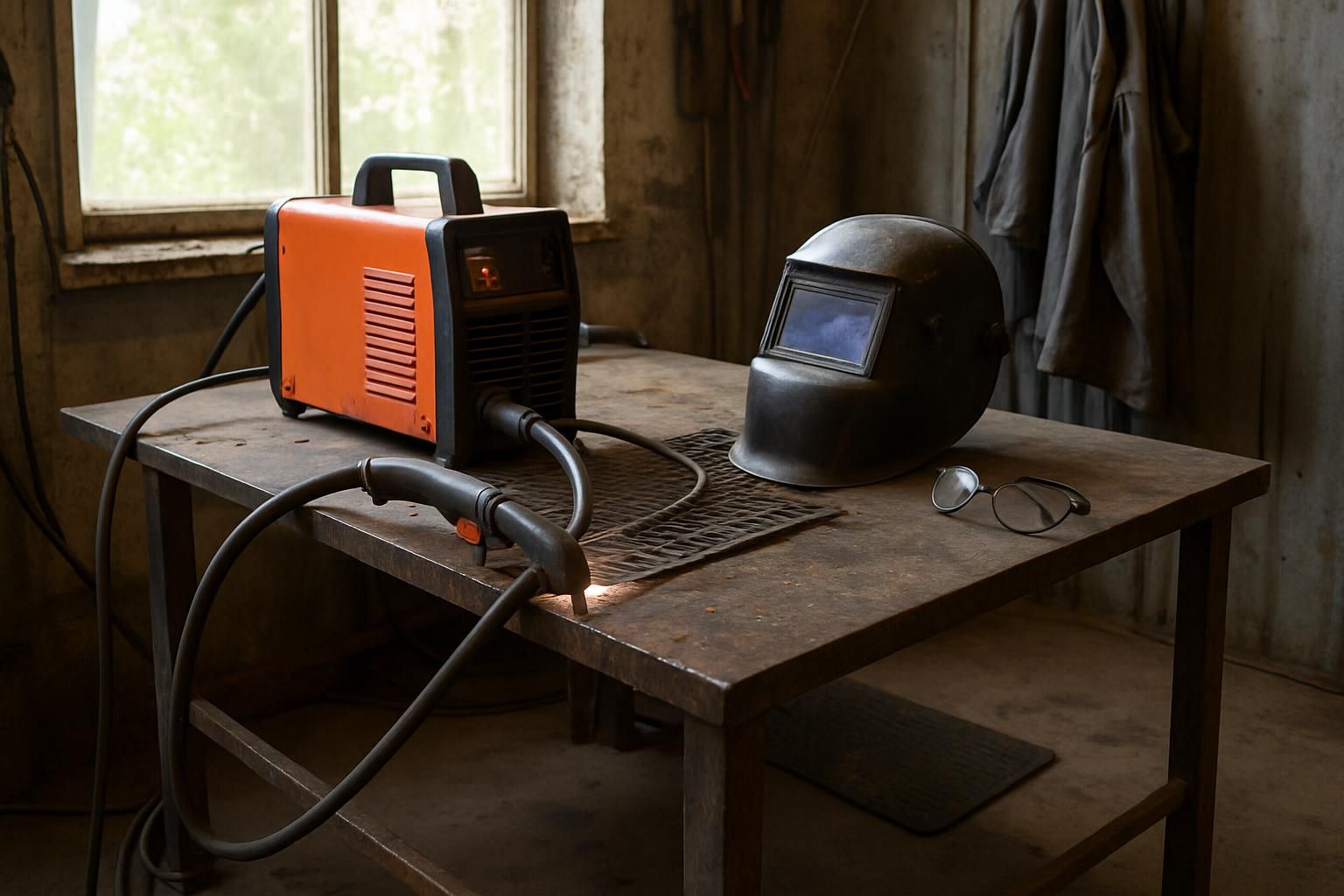
Use safety glasses and a welding helmet to protect your eyes during plasma arc cutting. Wear fire-resistant clothing to prevent burns. Ensure good ventilation to avoid inhaling toxic fumes, and stand on a rubber mat to guard against electric shocks from high voltage equipment.
Wear Proper Protective Equipment (PPE)
Wear safety glasses with side shields during plasma arc cutting to protect your eyes from sparks and debris. A spark once got under my regular glasses, which was a sharp lesson.3
For body protection, wear dry, fire-resistant clothing like leather or heavy denim. Choose gloves made of tightly woven fabric for safely handling hot metals. Leather high-top shoes are essential to protect your feet.4
Clothing should fit well to avoid catching sparks. This simple step helps prevent accidents in the workshop.
Ensure Proper Ventilation to Avoid Toxic Fumes
First, choose the right safety gear for plasma cutting. This includes fire-resistant clothing, safety glasses, a welding helmet, and hearing protection. Good airflow is crucial to removedangerous gases from cutting materials.
Use fans and vents in your workspace. In small places, use an air mask that pulls in fresh air.5
Before using a plasma torch, check the metal’s coating. Some coatings create toxic fumes when heated. Always look at the material safety data sheets (MSDS) for metals and their coatings to avoid inhaling harmful substances duringplasma cutting tasks.
Prevent Fire Hazards with Workspace Preparation
Keep flammable materials at least 35 feet away during plasma cutting.3 If moving them isn’t an option, use flame-proof covers to shield them. Seal off any small openings to stop sparks from getting through.
Keep a fire extinguisher within reach for quick response.
Work on non-conductive surfaces like wood or rubber mats to enhance safety. Using fire-resistant barriers and safe work surfaces is crucial when working with plasma cutters or welding torches.
This approach minimizes the risk of fires, protecting you and others in areas prone to sparks and high heat.
Stay Grounded to Avoid Electrocution
Make your workspace fire-safe, then focus on preventing electric shocks. Ground the plasma cutter to avoid shocks, followingNFPA 70 and OSHA guidelines. Inspect the ground cable daily; replace it if damaged.6
Avoid working in wet areas. Use dry rubber mats or plywood for insulation. Plasma cutters demand careful use to maintain safety.7
Technological Advancements in Plasma Safety
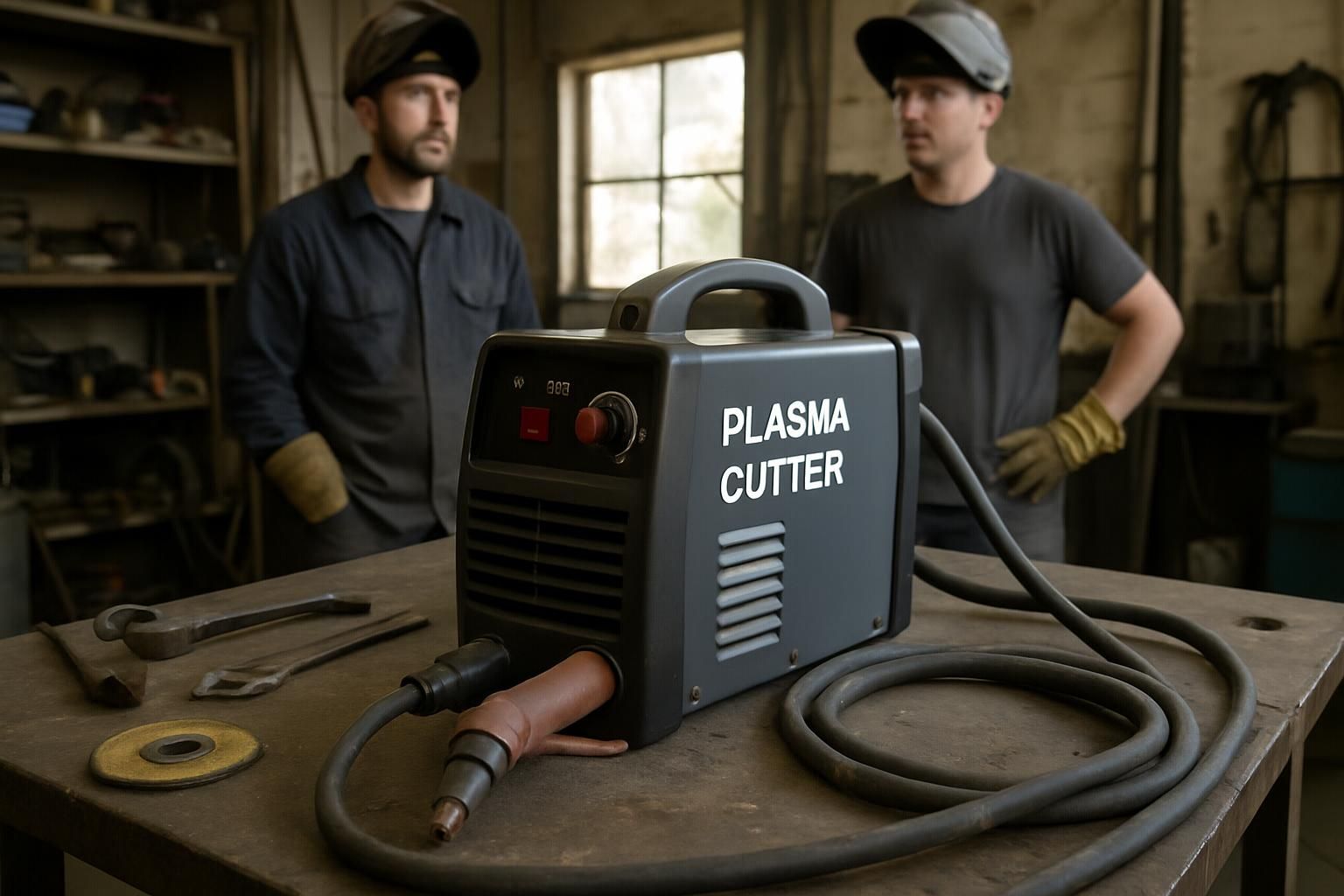
Plasmaskærere er blevet forbedret siden midten af 1990'erne og er blevet bærbare og mere overkommelige. Disse værktøjer inkluderer nu indbyggede sikkerhedsfunktioner for at beskytte mod elektrisk lysbueskader og brande.8 Det er vigtigt regelmæssigt at kontrollere disse sikkerhedskomponenter for at opretholde et sikkert arbejdsmiljø, nårskære metaller som stål eller aluminium. Arbejdere bærer ofte beskyttelsestøj og sikkerhedsbriller for ekstra beskyttelse på grund af teknologiske fremskridt.
Vedligeholdelsestips til forbrugsstoffer til plasmaskæring
Vedligehold dit plasmaskæreudstyr for bedre ydeevne og længere levetid. Brug en tjekliste for daglig rengøring og udfør regelmæssige eftersyn.9
- Rengør dit værktøj dagligt for at fjerne støv og metalaffald.
- Inspicer regelmæssigt hvirvelringe, elektroder og dyser til slid. 9
- Udskift dyser og elektroder sammen for præcise snit.
- Overvåg kutterens ydeevne; hvis kvaliteten falder, så undersøg dine værktøjer.
- Vedligehold kølesystemet for at forhindre overophedning. 10
Sikkerhedsforanstaltninger for plasmadonation
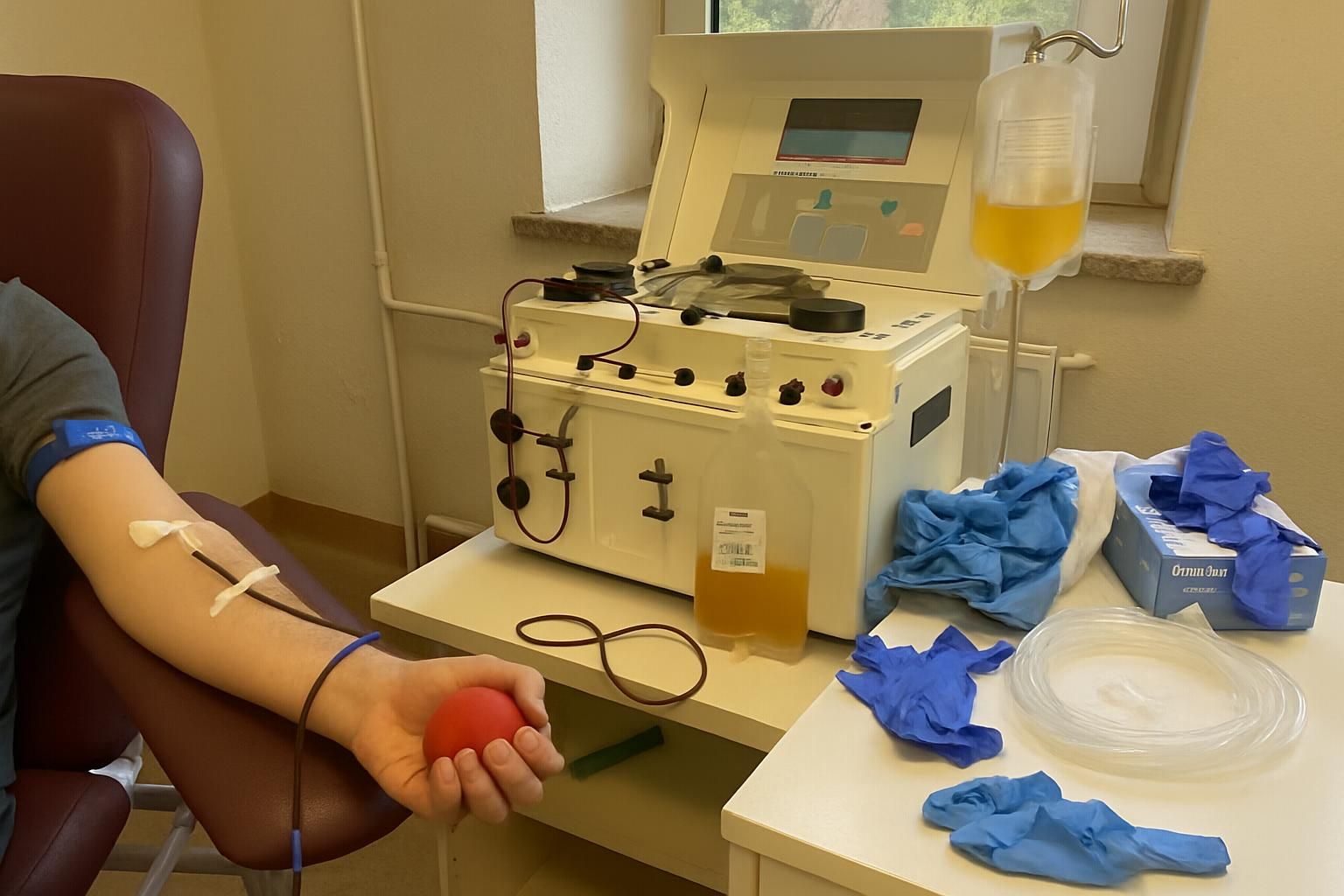
Plasmadonationssikkerhed omfatter regelmæssige sundhedstjek for donorer og brug af nye værktøjer til hver person for at forhindre bakteriespredning. Dette hjælper med at redde liv sikkert.
Rutinemæssig sundhedstjek for donorer
Inden de giver plasma, tjekker sundhedsprofessionelle donorer’ sundhed tæt på. De leder efter tegn på sygdomme eller medicinske tilstande, der kan gøre donation risikabelt. Ved hjælp af værktøjer som blodtryksmanchetter og termometre sikrer de, at donorens vitale tegn er normale.11
At informere donorer om mulige bivirkninger, såsom at føle sig træt eller svimmel efter donation, er nøglen. Renlighed er en topprioritet; personalet vasker altid hænder grundigt og bruger friske nåle til hver donor.
Efter donation gives råd om at forblive sund – drikkevand og hvile efter behov – for at hjælpe donorer med at komme sig hurtigt og sikkert med at bidrage til plasma-afledte terapier.
Engangsudstyr for at forhindre kontaminering
Engangsinstrumenter, såsom nåle, hæmmer overførslen af bakterier under plasmadonationer. Kun uberørte, uberørte genstande kommer i kontakt med donoren, en praksis, der garanterer sikkerhed.
Medarbejderne forbereder udstyret ved sterilisering før brug, hvilket giver donorer sikkerhed mod at pådrage sig sygdomme fra andre.12
Protokoller til opretholdelse af sikkerheden ved håndtering af blod er alvorlige. Hospitalspersonalet bruger nye handsker til hver procedure og dispenserer dem umiddelbart efter brug. De renser donationsområdet flittigt for at forhindre potentiel plasmakontamination eller spredning af sygdomme.
Lektioner fra hændelser i det virkelige liv og tips til forebyggelse
Virkelige hændelser fremhæver nøglesikkerhedspraksis ved plasmaskæring og plasmadonation.
- Hold brændbare materialer væk fra skæreområdet for at undgå brandfare.
- Bær personligt beskyttelsesudstyr som sikkerhedsbriller, svejsehjelme og brandsikkert tøj til beskyttelse mod gnister og varmt metal.
- Sørg for god ventilation for at undgå at indånde giftige dampe fra plasmaskæring.
- Jordforbind elektriske værktøjer for at forhindre elektrisk stød ved at lede overskydende spænding sikkert ned i jorden.
- Plasmadonorer bør gennemgå regelmæssige helbredsundersøgelser for at bekræfte deres egnethed til donation, hvilket sikrer sikkerhed for både donor og modtager. 13
- Ved plasmadonation skal du kun bruge nåle og rør én gang for at forhindre spredning af infektioner.
- Vide, hvordan man betjener en ildslukker, når du arbejder med plasmabueskærere eller skærebrændere.
- Opbevar komprimerede gasser korrekt for at undgå eksplosioner. Sæt altid hætter på, når de ikke er i brug.
- Beskyt hørelsen med høreværn som ørepropper eller høreværn for at minimere støjrisici fra plasmaskærere.
- Vær forsigtig, når du skærer materialer, der indeholder tungmetaller, med en plasmaskærer, da de kan frigive giftige gasser. 14
These guidelines are based on real-life examples where failure to follow these precautions resulted in accidents or health risks, underscoring the need for vigilance and proper preparation in plasma procedures.
Best Practices for Maintaining Equipment Safety
Taking lessons from past errors is crucial for progress. Now, we shift our attention to maintaining our plasma cutting equipment in the best condition.
- Perform daily inspections on your plasma cutter. Keep an eye out for any signs of wear and tear or damage. 15
- Ensure the cutting area is devoid of flammable materials. This encompasses elements like wood, paper, and solvents. 1
- Confirm the effectiveness of your fire extinguisher. It should be compatible with electrical fires.
- Safety glasses and a welding helmet should always be worn during cutting sessions. These offer protection to your eyes from sparks.
- Utilize clothing that is resistant to flame to shield against burns from heated metal.
- Make certain that all compressed gases are securely stored outside the cutting area.
- Accomplish effective grounding of your equipment to circumvent shock. This implies connecting it to a genuine earth ground. 1
- Provide good ventilation in the area to eliminate harmful fumes and gases from cutting.
- Situate flammables at a safe distance to eliminate fire risks during plasma arc cutting.
- Don’t overlook the importance of hearing protection due to noise dangers.
Hver foranstaltning er afledt af at forstå, hvad der viser sig at være optimalt over en periode, hvilket sikrer brugersikkerhed, mens du betjener potente værktøjer som plasmaskærere.
Konklusion
Plasmaskæring er et nyttigt værktøj. For at være sikker skal du bære det rigtige sikkerhedsudstyr og sørge for, at dit område er godt ventileret. Kontroller altid, at alt fungerer korrekt, og undgå at røre ved elektriske dele for at undgå elektrisk stød.
At lære af tidligere fejl forbedrer sikkerheden for alle. Ved at følge disse sikkerhedstip hjælper brugerne med at håndtere plasmaværktøjer sikkert uden at komme til skade.
FAQS
1. Hvad er nogle sikkerhedsretningslinjer for plasmaskæring?
Sikkerhedsretningslinjer for plasmaskæring omfatter brug af personlige værnemidler som sikkerhedsbriller, en svejsehjelm og brandsikkert tøj. Det er også vigtigt at undgå brændbare materialer og være opmærksom på potentielle brandfarer.
2. Hvordan kan jeg beskytte mig mod giftige dampe under plasmabueskæring?
Under plasmabueskæring bør du sikre tilstrækkelig ventilation for at forhindre eksponering for giftige gasser. Brug af personlige værnemidler såsom en svejsehjelm kan også hjælpe med at beskytte mod disse dampe.
3. Hvilken slags gear er nødvendig for sikker brug af en plasmaskærer?
For sikker brug af en plasmaskærer anbefales det, at du bærer sikkerhedsbriller, høreværn for at beskytte mod støjfarer og brandsikkert tøj på grund af risikoen for sprøjt af smeltet metal.
4. Er der nogle specifikke procedurer eller forholdsregler, når man arbejder med højspænding ved plasmabueskæring?
Når du arbejder med højspændinger i plasmabueskæring, er det afgørende at følge de nationale elektriske standarder og træffe forebyggende foranstaltninger som at bruge gummimåtter eller andre isoleringsmaterialer under fødderne.
5. Kan galvaniseret stål skæres sikkert med en plasmaskærer?
Ja! Men husk, at galvaniseret stål afgiver giftige dampe, når de skæres af varmt plasma, så tag nødvendige forholdsregler såsom god ventilation og brug af passende personligt beskyttelsesudstyr (PPE).
6. Er der behov for særlig træning, før du bruger værktøjer som oxy-acetylen-brændere eller butan-lightere i forbindelse med min plasmaskærer?
Absolut! Korrekt træning er afgørende før håndtering af disse værktøjer, fordi de involverer brændbare gasser, som kan føre til ulykker, hvis de ikke håndteres korrekt.
Referencer
- ^ https://cksupply.com/plasma-cutter-safety/ (2019-11-18)
- ^ https://www.fastcutcnc.com/post/plasma-table-safety-tips
- ^ https://www.sunbeltrentals.com/resources/blog/industrial-tool/plasma-cutting-safety/
- ^ https://wholesale.yeswelder.com/blog/plasma-cutting-safety-measures/
- ^ https://www.cyriousmetalworks.com/plasma-cutter-ventilation-requirements/ (2023-05-20)
- ^ https://www.shopsabre.com/cnc-plasma-cutter-safety-tips/ (2020-07-27)
- ^ https://thermacut.com/en-us/__trashed/ (2024-11-25)
- ^ https://www.sciplasma.com/post/safety-considerations-plasma-cleaning
- ^ https://blog.red-d-arc.com/plasma-cutting/reduce-wear-tear-plasma (10-11-2023)
- ^ https://esab.com/us/nam_en/esab-university/blogs/maintenance-of-plasma-cutting-machine-a-step-by-step-guide/
- ^ https://olgam.com/understanding-the-safety-measures-in-plasma-donation/ (2024-06-13)
- ^ https://www.kedplasma.us/plasma-donation-centers-safe-what-you-need-to-know-about-safety-protocols/
- ^ https://pmc.ncbi.nlm.nih.gov/articles/PMC3356109/
- ^ https://pmc.ncbi.nlm.nih.gov/articles/PMC2655764/
- ^ https://www.koike.com/blog/best-practices-for-handling-a-plasma-cutting-torch/?srsltid=AfmBOor3r7mprla75nGCrbDJ8Cb3APHEtScm29mIitBRFZmyciDTk5cs (2025-01-15)

