XPR300 Plasma Swirl Ring 420242: The Engine of Precision in Plasma Arc Dynamics
Introduction: The Unseen Architect of Cutting Quality
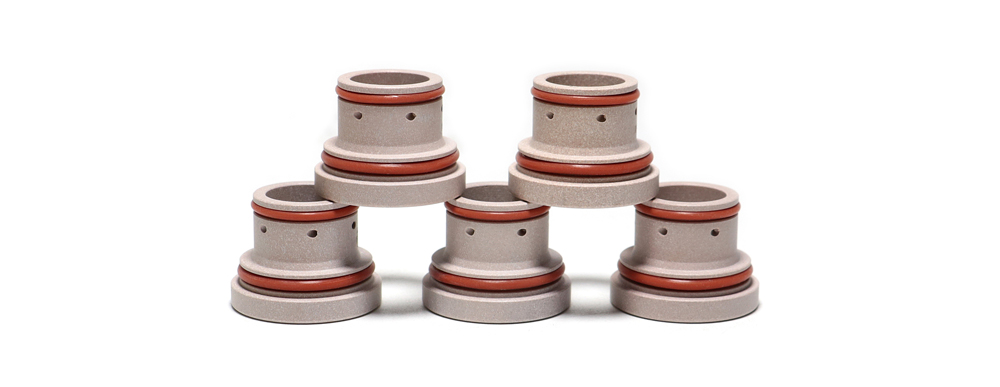
In the high-stakes world of industrial plasma cutting, where cut quality, speed, and consumable longevity directly translate to profitability, certain components operate behind the scenes yet dictate frontline performance. For operators of the Hypertherm XPR300 plasma system, one such component is the XPR300 Plasma Swirl Ring 420242. This genuine OEM part is not merely a spacer or insulator; it is the precision-engineered heart of gas dynamics, responsible for transforming raw plasma gas into a stabilized, focused cutting arc. This article provides an exhaustive examination of the XPR300 Plasma Swirl Ring 420242, revealing its critical function, advanced engineering, and why selecting this genuine component is a non-negotiable decision for achieving consistent, high-definition cuts and maximizing the lifespan of your entire consumable system.
The Pivotal Role: Understanding Gas Vortex Creation
The swirl ring is a deceptively simple-looking component positioned between the torch body and the nozzle. Its singular, vital purpose is to impart a high-velocity swirl or vortex to the plasma gas. This rotational motion is fundamental to the cutting process for several reasons:
-
Arc Constriction and Stabilization: The centrifugal force created by the swirling gas “pinches” the plasma arc, making it denser, more focused, and significantly more stable. This results in a cleaner cut with reduced arc wander and flare.
-
Nozzle Protection (Preventing Double-Arcing): The vortex creates a cooler boundary layer of gas along the inner wall of the nozzle. This layer insulates the nozzle from the intense heat of the central plasma arc, dramatically extending nozzle life and preventing catastrophic “double-arcing,” where the arc jumps to the nozzle wall.
-
Centering the Arc: A properly designed swirl ring ensures the arc attaches concentrically to the electrode and exits perfectly centered through the nozzle orifice. This is essential for achieving a square cut edge with symmetrical bevel.
-
Heat Distribution: By stabilizing the arc, the XPR300 Plasma Swirl Ring 420242 promotes even thermal distribution, leading to uniform wear on both the electrode and nozzle.
Engineering Excellence: Deconstructing the 420242 Swirl Ring
The part number 420242 identifies this component as a genuine Hypertherm part, engineered with exacting specifications for the XPR300 system. Its design is the result of advanced fluid dynamics modeling and material science.
Key Design Features and Material Superiority:
-
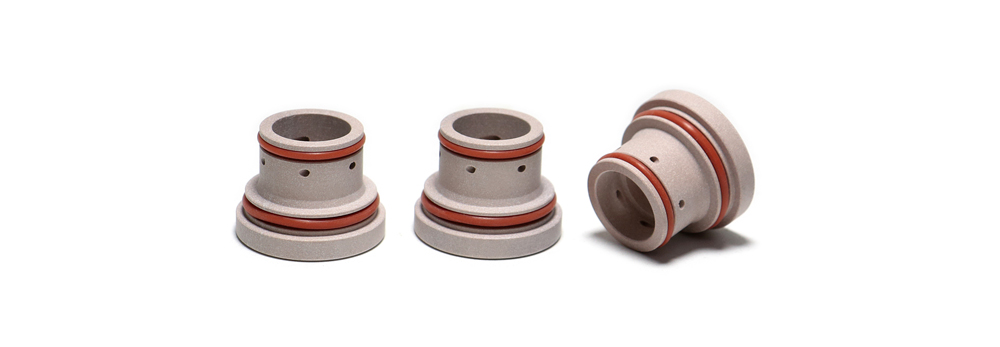
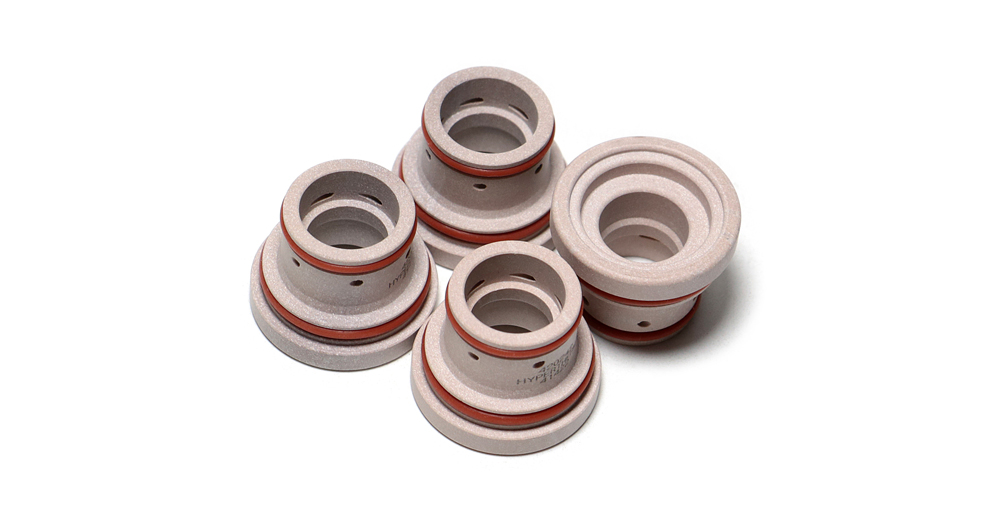
Precision Gas Channels/Ports: The most critical feature is the geometry of the tangential inlet channels. In the XPR300 Plasma Swirl Ring 420242, these are CNC-machined to an exact angle, size, and surface finish to create the optimal vortex strength and pattern for the XPR300’s gas pressures and flow rates.
-
Advanced High-Temperature Insulating Material: The ring is typically manufactured from a high-purity ceramic or an advanced engineered composite. This material must provide excellent electrical insulation between the electrode and nozzle while withstanding extreme and repeated thermal shock.
-
Optimized Thermal and Chemical Resistance: The formulation is designed to resist degradation from high heat and from interaction with various plasma gases (O₂, N₂, Air).
-
Dimensional Perfection for Alignment: Its outer and inner diameters, as well as its seating surfaces, are held to micron-level tolerances. This guarantees perfect concentric alignment within the torch, ensuring the gas vortex is centered on the electrode and nozzle.
Technical Specifications and Performance Comparison
*Table 1: The XPR300 Plasma Swirl Ring 420242 is a low-cost component with an outsized impact on cut quality and total consumable expenditure.*
Compelling Advantages and Tangible Benefits
-
Dramatically Extended Nozzle and Electrode Life: This is the primary financial benefit. A proper vortex from a genuine XPR300 Plasma Swirl Ring 420242 shields the nozzle from thermal erosion. Replacing a $15 swirl ring to save a $80 nozzle and a $45 electrode represents a massive return on investment.
-
Uncompromised, Consistent Cut Quality: The stability provided by a perfect gas vortex translates directly to the cut edge. Expect square edges, minimal dross, and consistent kerf width, reducing or eliminating secondary operations like grinding.
-
Improved Process Stability and Uptime: An unstable arc caused by a poor swirl ring leads to misfires, poor starts, and unexplained quality drops. The 420242 ensures reliable operation, maximizing productive arc-on time.
-
Optimal Gas Efficiency and Performance: A precise vortex uses the energy of the plasma gas most effectively to constrict and stabilize the arc. An inferior ring wastes gas through turbulent, inefficient flow.
-
Protection of the Torch Body: By preventing double-arcing events, a functional swirl ring safeguards the far more expensive torch body from catastrophic damage.
Ideal Application Scenarios
The XPR300 Plasma Swirl Ring 420242 is always critical, but its importance becomes glaringly apparent in specific situations:
-
High-Definition and Fine-Cutting: Where kerf consistency and edge squareness are non-negotiable for part fit and finish.
-
Cutting Thick Material: Piercing and cutting plate over 1 inch (25mm) subjects the nozzle to extreme back-force and heat; a robust vortex is essential for protection.
-
Long, Continuous Production Runs: Stability over time is key to preventing quality drift in the middle of a large batch.
-
Using High-Energy Process Gases (e.g., Oxygen): Different gases behave differently; the OEM swirl ring is engineered for the system’s full range.
-
After Any Unexplained Consumable Failure: A failed nozzle or electrode is often a symptom, not the cause. The swirl ring should be the first component inspected.
System Integration: Related Consumables for Peak Performance
The XPR300 Plasma Swirl Ring 420242 is the central piece of a matched consumable set. For optimal results, it must be paired with genuine components:
-
XPR300 Electrode (420224 or 420356): The cathode that interacts with the arc initiated by the swirl ring’s gas flow.
-
XPR300 Nozzle (420225 or 420315): The anode that is protected by the gas vortex. The nozzle and swirl ring are a matched set.
-
XPR300 Retaining Cap (420226): This part holds the swirl ring and nozzle in perfect alignment against the torch body.
-
XPR300 Shield (420228 or 420360): The outer protector that manages secondary shielding gas.
Critical Maintenance Tip: The XPR300 Plasma Swirl Ring 420242 should be inspected every time you change the nozzle. While it often lasts for 2-3 nozzle sets, look for signs of cracking, melting, carbon tracking (black lines), or eroded gas channels. When in doubt, replace it. It is the cheapest insurance policy for your entire front-end consumable kit.
Conclusion: The Small Investment with an Extraordinary Return
The XPR300 Plasma Swirl Ring 420242 perfectly exemplifies the concept of preventative, high-value maintenance. It is a low-cost component that exerts tremendous influence over cut quality, consumable costs, and system reliability. Neglecting this critical part invites a cascade of expensive problems: destroyed nozzles, poor cut quality, wasted process gas, and frustrated operators.
For fabricators, manufacturers, and steel service centers that depend on the precision and power of the XPR300 system, insisting on the genuine XPR300 Plasma Swirl Ring 420242 is a simple, yet profoundly impactful decision. It safeguards your investment, ensures your output meets the highest standards, and delivers an undeniable return on investment through stability and savings.
Frequently Asked Questions (FAQ)
Q1: How often should I replace my XPR300 Plasma Swirl Ring 420242?
A: For optimal performance and cost savings, inspect it with every nozzle change. While it may last through 2-3 nozzle/electrode sets, replace it immediately if you see any cracking, melting, or significant erosion of the gas channels. Proactive replacement is far cheaper than a failed nozzle.
Q2: Can I clean and reuse a swirl ring?
A: You can gently clean off external spatter, but you cannot clean or restore the internal gas channels or degraded insulating material. If there is any sign of heat damage, carbon tracking, or wear, it must be replaced. Its performance cannot be “refreshed.”
Q3: My cuts are beveled, and my nozzles fail quickly on one side. Could the swirl ring be the cause?
A: Absolutely. A worn or out-of-spec XPR300 Plasma Swirl Ring 420242 is a leading cause of an off-center arc, which creates a beveled cut and causes uneven, rapid wear on one side of the nozzle. This is a classic symptom.
Q4: Are all swirl rings the same? Can I use a cheaper generic one?
A: No, they are not the same. Generic swirl rings often use incorrect materials and have imprecise channel geometry. This creates a weak or unstable vortex, offering little to no protection for your nozzle. The minor savings are quickly erased by a single premature nozzle failure.
Q5: Where can I purchase the genuine XPR300 Plasma Swirl Ring 420242?
A: Always purchase from authorized Hypertherm distributors or certified welding supply stores that guarantee genuine OEM parts. This ensures you receive the correctly engineered component that matches your system’s specifications, ensuring safety and performance.


Reviews
There are no reviews yet.